


INVOLUNTARY DISRUPTION
PRODUCT DESIGN

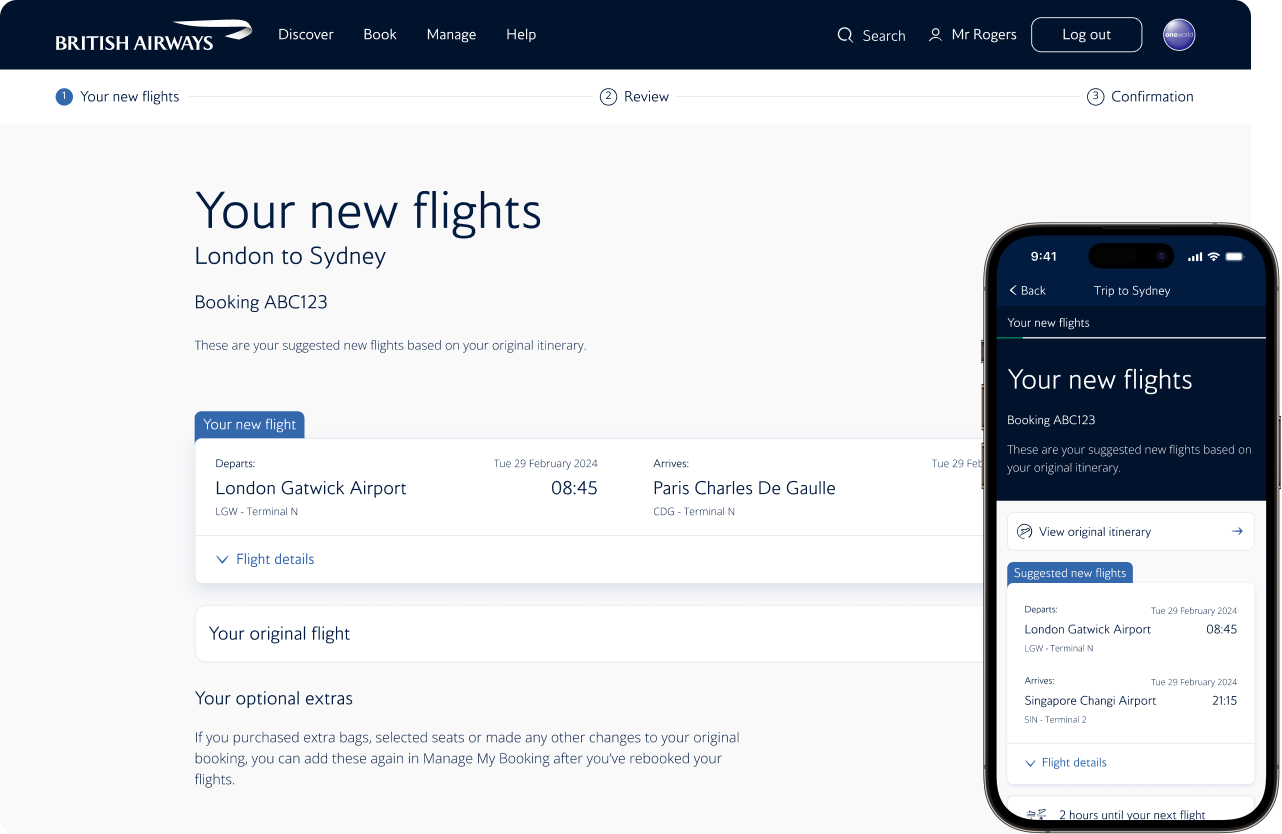
Inheriting a 20-year-old, outdated product that struggled to handle British Airways' disrupted customers, I worked with teams across the company to drive a 14% increase in the number of customers who successfully resolved their disruptions online via our tool, before creating a new app.
Summary
RESOLVING DISRUPTION
I was placed in one of the most complex product areas in the business — Involuntary Disruption, otherwise known internally as ‘Invol’. A self-service tool for customers to manage cancelled or delayed journeys, it had been neglected for 20 years because it drove no direct revenue. Then COVID made disruption constant, and a tool nobody had maintained became a tool everybody needed.
Beneath the surface it was a hybrid of five legacy back-end systems — slow, unreliable, inaccessible, and pushing stressed customers to £14-a-call contact centres. My job was to make it work. Halfway through, BA began replatforming its entire digital estate and I moved to the new app team, where I got to rethink disruption from scratch. Despite this, my designs contributed to a 14% increase in disruptions being resolved online, which saved the business approximately £3.2 million, and much more in reputational damages.
PRODUCT TIMELINE
Mar 2023 - March 2025
ROLE + RESPONSIBILITY
Product Designer → Senior Product Designer — owned end-to-end design and research for the disruption product, from discovery through dev handover, often working solo
TEAM + TOOLS
Cross-functional agile squad (PO, scrum master, BA, engineers)
Figma | User Testing | Data Dog | Confluence
THE problem
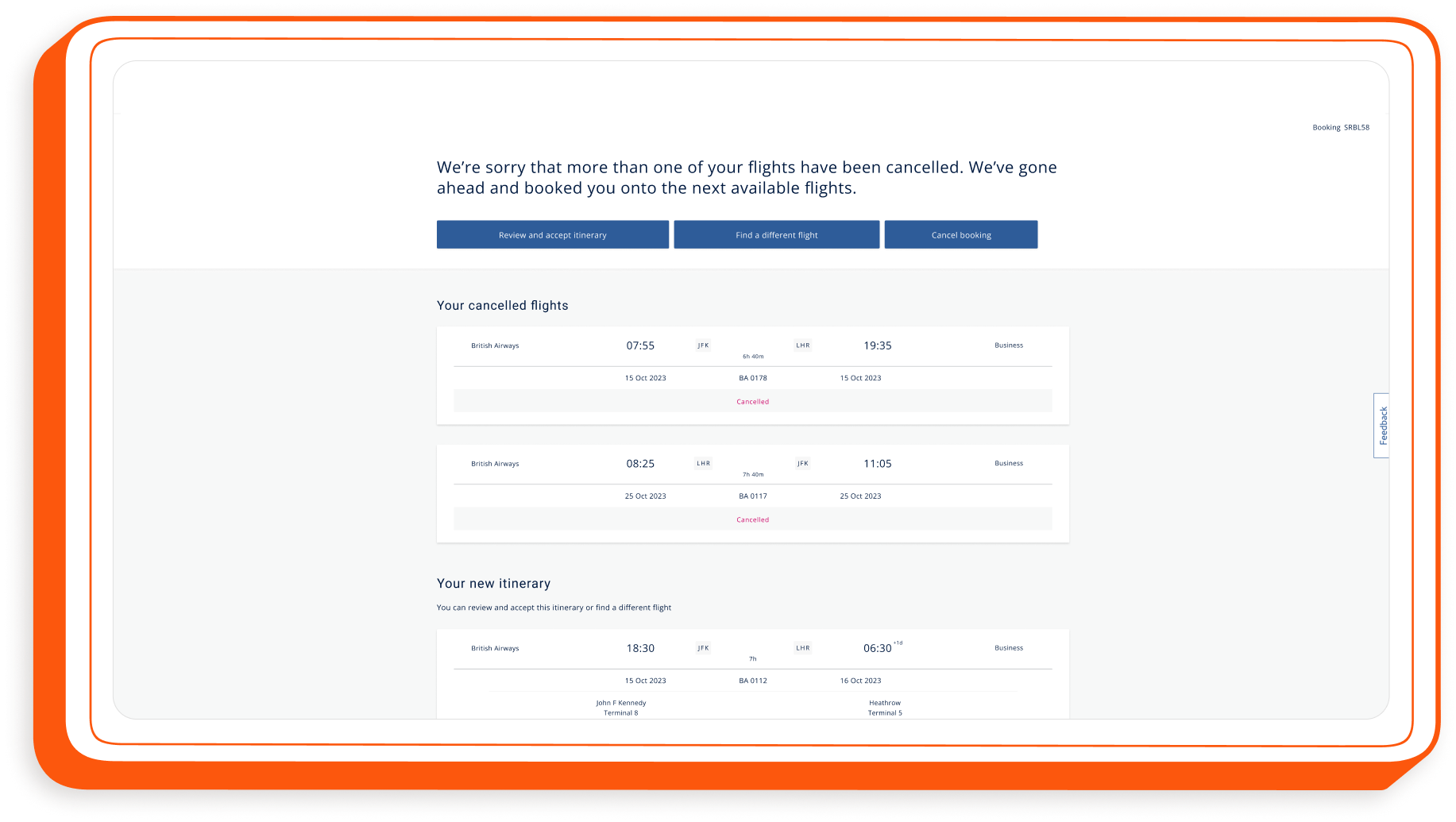
On the surface, a simple self-service tool: accept a replacement flight, find an alternative, or take a refund. Underneath, a nightmare of five legacy tools and esoteric business rules that made it slow, confusing and unreliable — and critically, inaccessible. For a product designed to help people who are already stressed and stranded, that was a serious problem.
The Solution
Threading this particular needle was a significant challenge. It required extensive stakeholder relationship building across BA, a vast organisation of over 30,000 people, to gain access to key resources and information. To achieve our accessibility goals, I learned and contributed to BA's exceptional design system (BAgel), which was created with accessibility at its core. Rethinking our product also involved elevating our approach to research, testing, and prototyping, all of which I used to help shape the strategy of my squad.
Recurring - Discovery
Understanding DISRUPTION
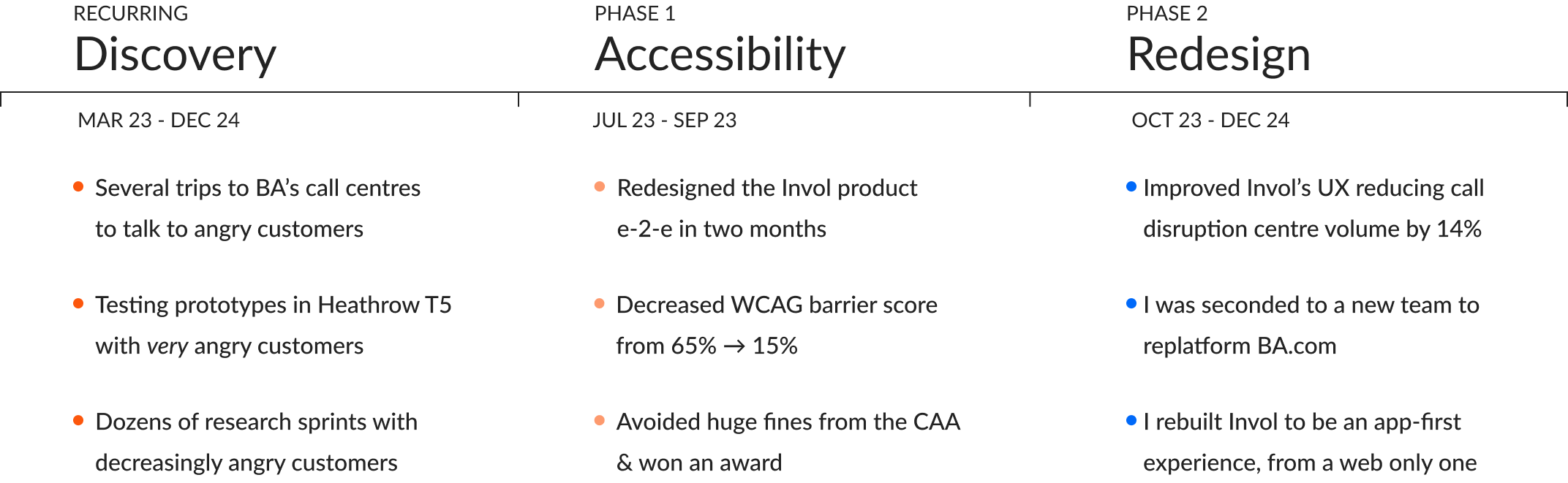
Diving straight in, I went direct to our disruption call centre in Manchester and spoke to staff who revealed a lot about our existing online tool:
- it was unreliable and unclear,
- it didn’t suggest suitable alternate flights,
- it often didn’t handle on the day disruptions,
- it didn’t handle complex (connecting journey) disruptions,
- it didn’t handle paid for extras (seats/baggage etc),
- people generally liked the reassurance of a real person.
These reasons drove a lot of customers to the call centre, and at £14 per call this was costing the business millions and significant reputational damage.
What did users think?
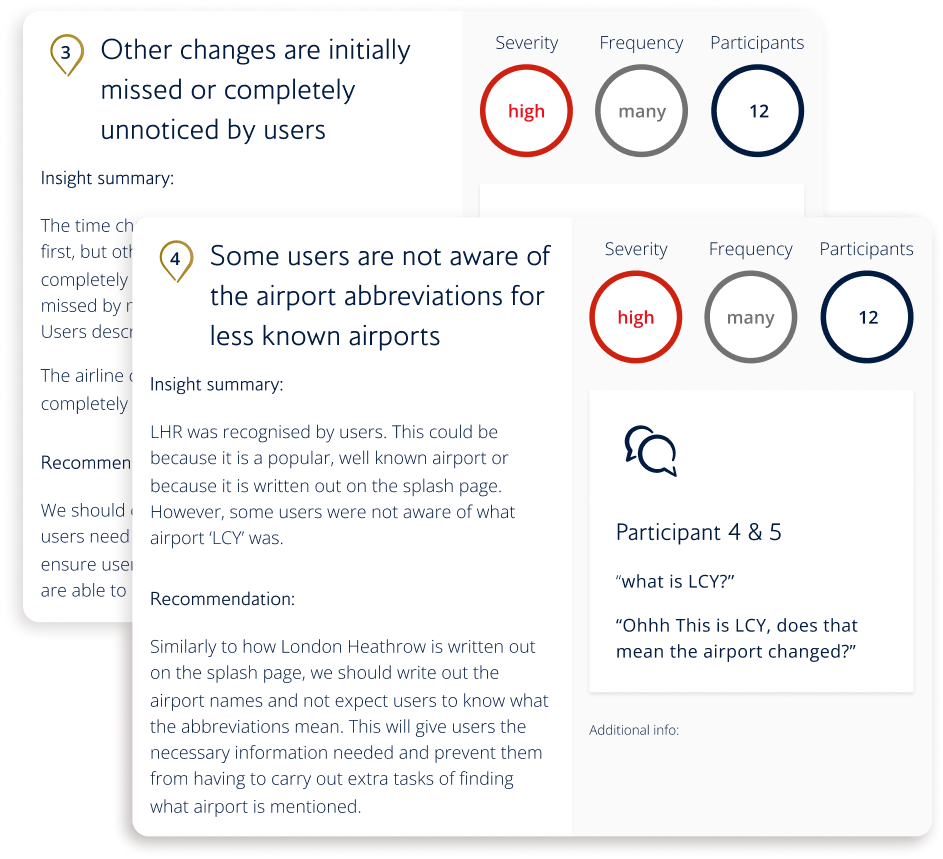
Gathering user feedback was next. We ran a dozen contextual inquiries and found that the product had plenty of design flaws, which, given that it was designed to help stressed and overwhelmed users, didn’t bode well.
One major issue was that users often missed vital information due to its design. For example, airport names - represented by their three-character codes - were overlooked by 60% of users.
Through our interviews and user tests we discovered their main gripe, if an airline couldn’t find a good alternative flight. Most said “I’ll never fly with them again” - lining up nicely with what we learned in Manchester.
British Airways’s customers
38%
of users got stuck using the product
60%
of users missed changes to key flight info
66%
of users wanted someone to talk to
88%
of users wanted info on purchased extras
phase one - Accessibility
Getting accessible
Before I joined, my squad had been working on making our 20+-year-old product accessible, however, without a designer, their approach was purely tech-oriented. As I got acquainted with the team and project, it was clear urgent intervention was needed, especially with a looming November deadline from the Civil Aviation Authority (CAA), threatening fines if we didn't meet specific accessibility standards.
The “WTAF” moment
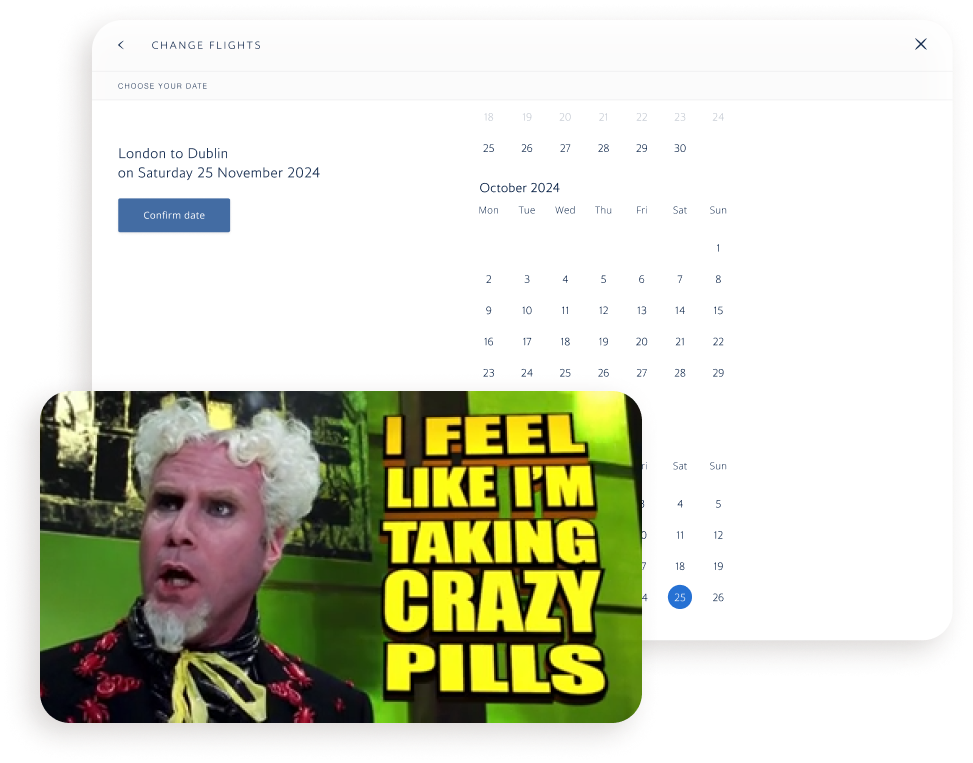
As I was getting settled into my new squad I was consulted on making our product’s date picker PAGE accessible. For many many reasons, this wasn’t possible and I stepped in to do some vital course corrections.
Their focus was solely on fixes to the code, markup text, and page order - which left unchecked would have meant screen reader users having to tab through an endless 365-day calendar page to find new flights.
Whilst this was no-one’s fault within the team, this was a very early test of my mettle and I quickly stepped into a leadership capacity to right the ship so we could meet these tight deadlines.
Owning accessibility
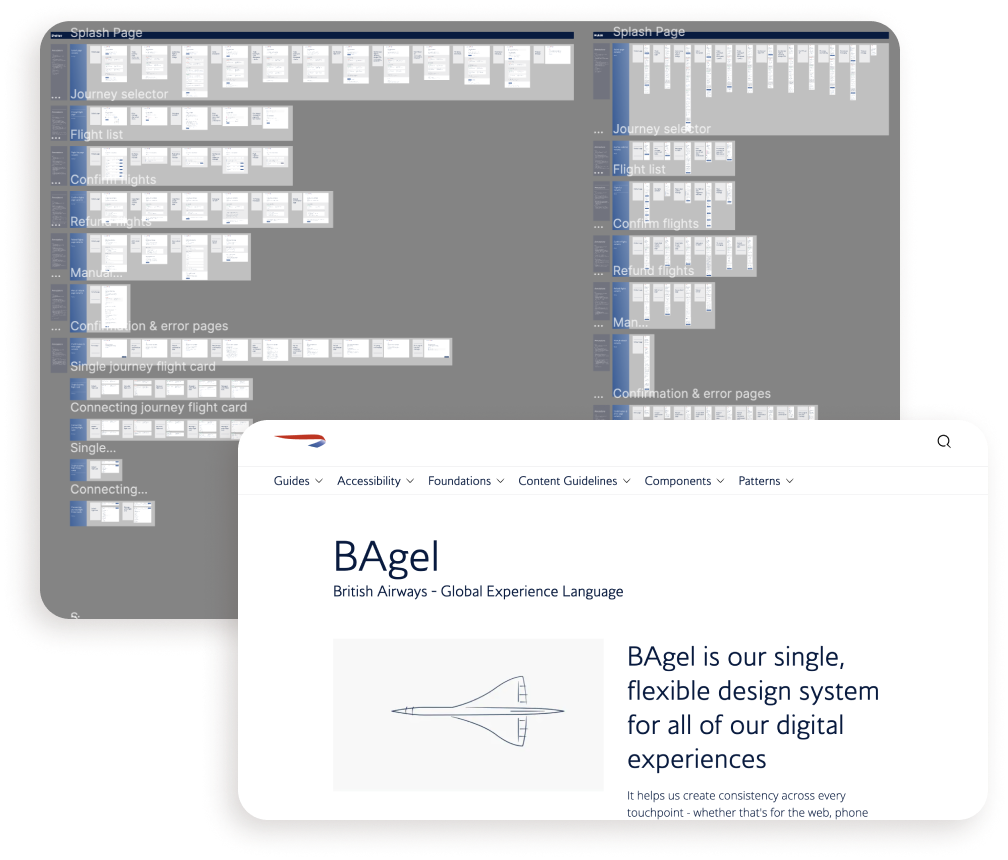
When I joined, my squad was just nine months old and still finding its feet, with no prior front-end experience. Leveraging BA’s relatively new design system, BAgel, I redesigned our product end-to-end.
This caused some friction initially, as my squad - who had already worked very hard on their solutions - believed their work had been for nothing but we caught things just in time, avoiding any sunk costs.
Using pre-built, accessible-by-default components we sped up the process, avoiding the need for complex coding gymnastics, and by ensuring I stayed on hand at all times I built strong bonds within my new squad.
The everything BAgel
Since our design system, BAgel, is always evolving I got involved in refining a few experimental components and patterns, in particular the new flight card pattern.
Leveraging ongoing discovery work and user testing, we found that “less is more” in terms of information at this stage for users. Only vital information was necessary and this vastly improved comprehension for our users.
Serving several purposes this process made our product accessible, laid the groundwork for the larger product redesign and created a steady flow of design work to foster an efficient, agile process for my front-end devs.
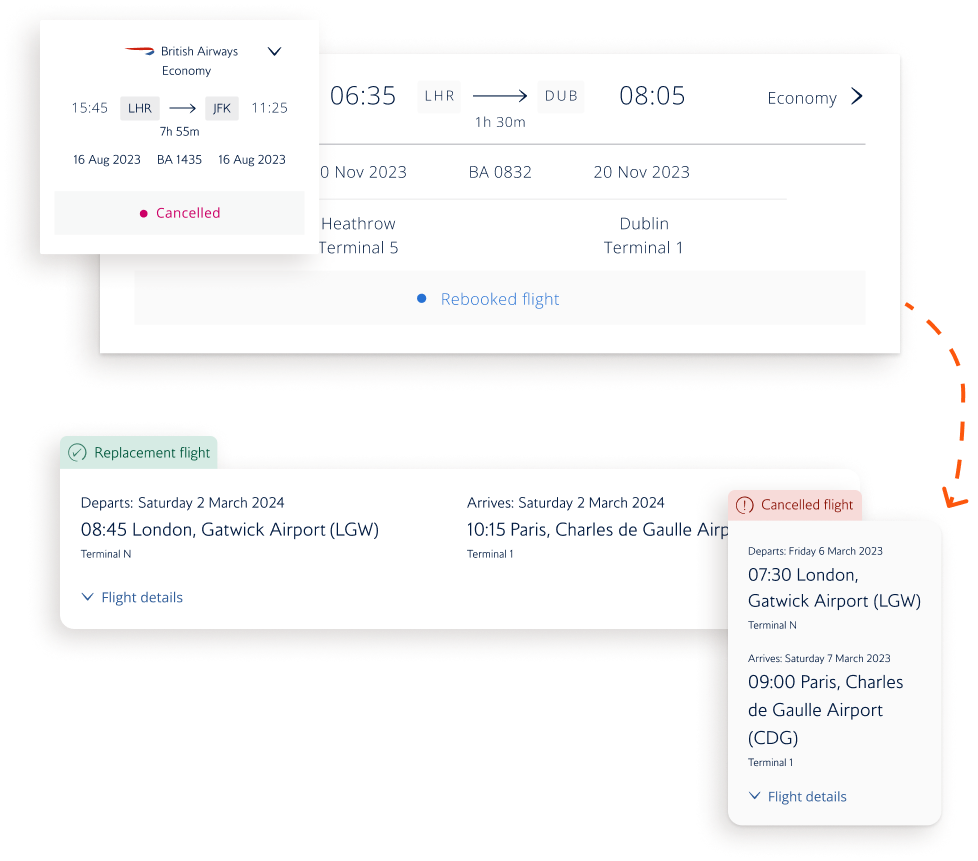
INvol Accessible
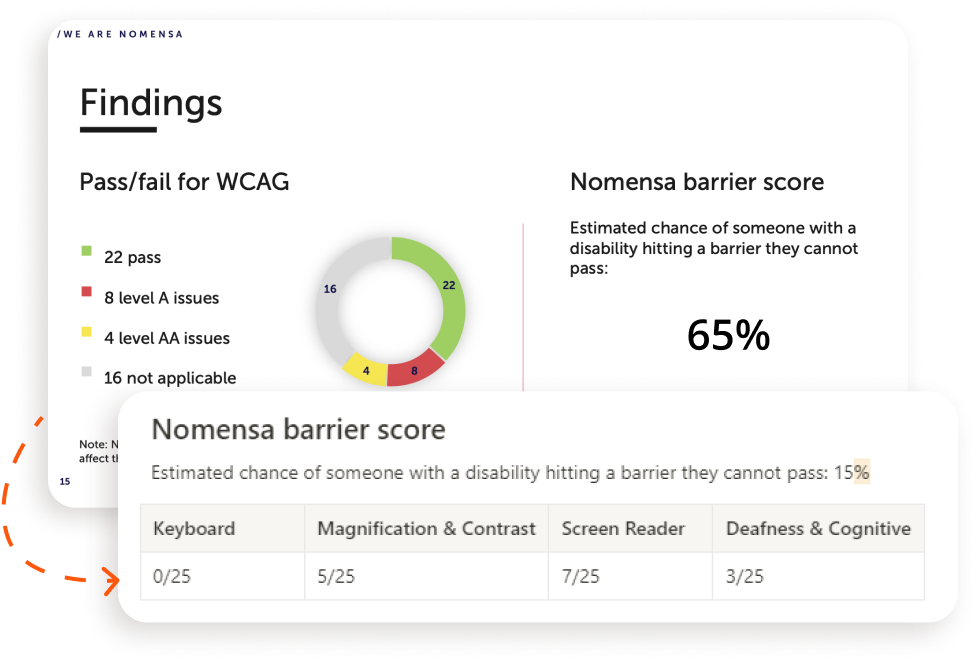
embedding accessibility
Working with an agency specialising in accessibility, our product initially scored a WCAG barrier score of 65%. By early 2024, our score was 15% and continuing to drop.
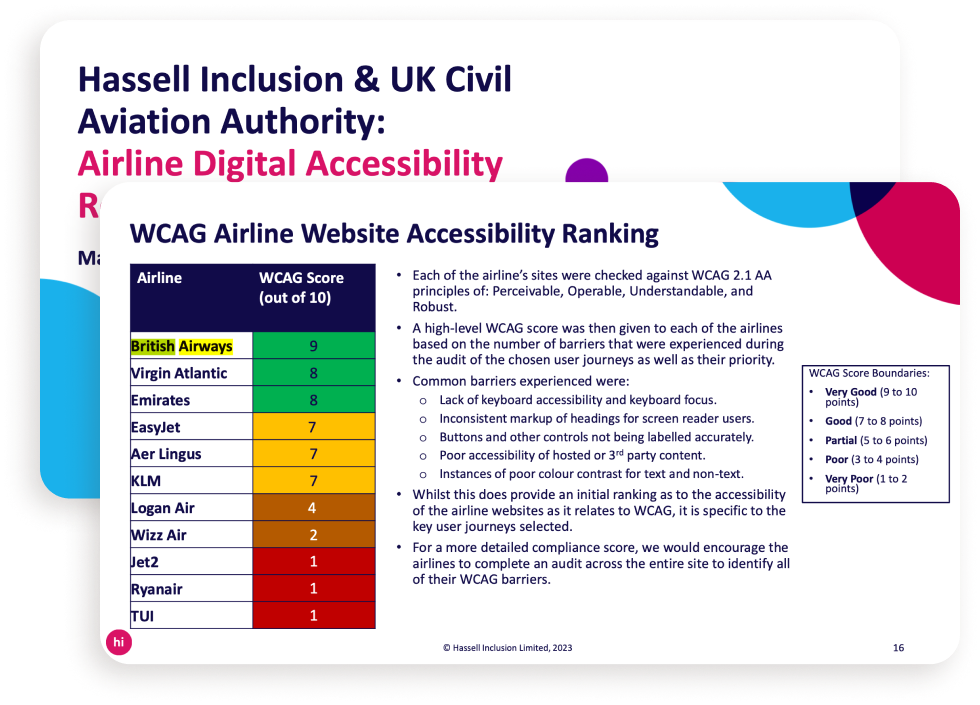
Award-winning accessibility
Not only did we avoid fines from the Civil Aviation Authority, we were number one in their Airline Website Accessibility Ranking for 2023.
phase two - Redesign
Improving Disruption
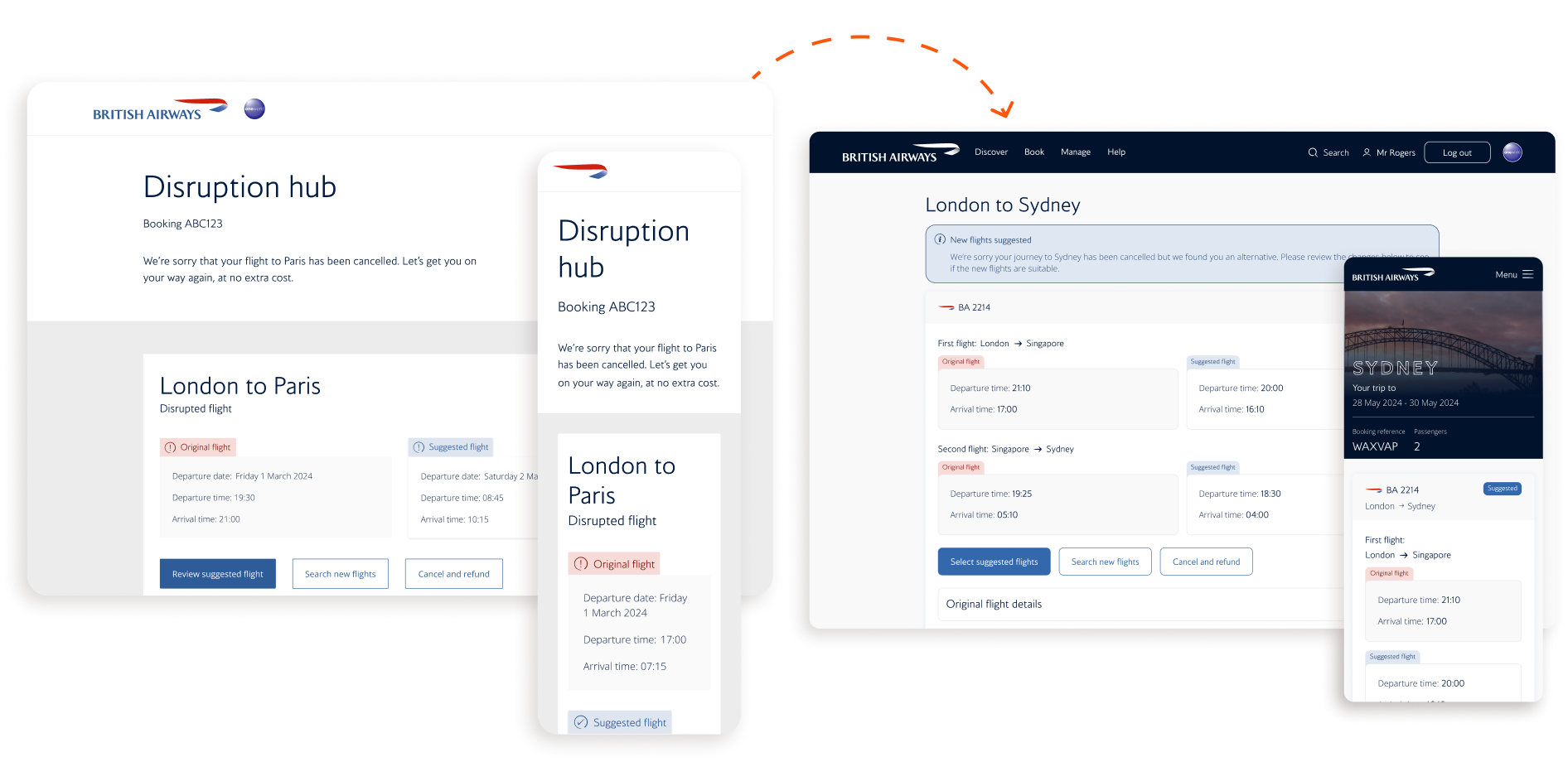
Combining the accessibility work with research and user testing, we formed a clear picture of how to improve Involuntary Disruption. Knowing that we were moving to a new and improved tech stack, we staggered our re-design and development efforts into two phases. This approach ensured we resolved a lot of pain points while setting a solid foundation for future improvements by ensuring our tool could handle any disruption scenario.
What came first
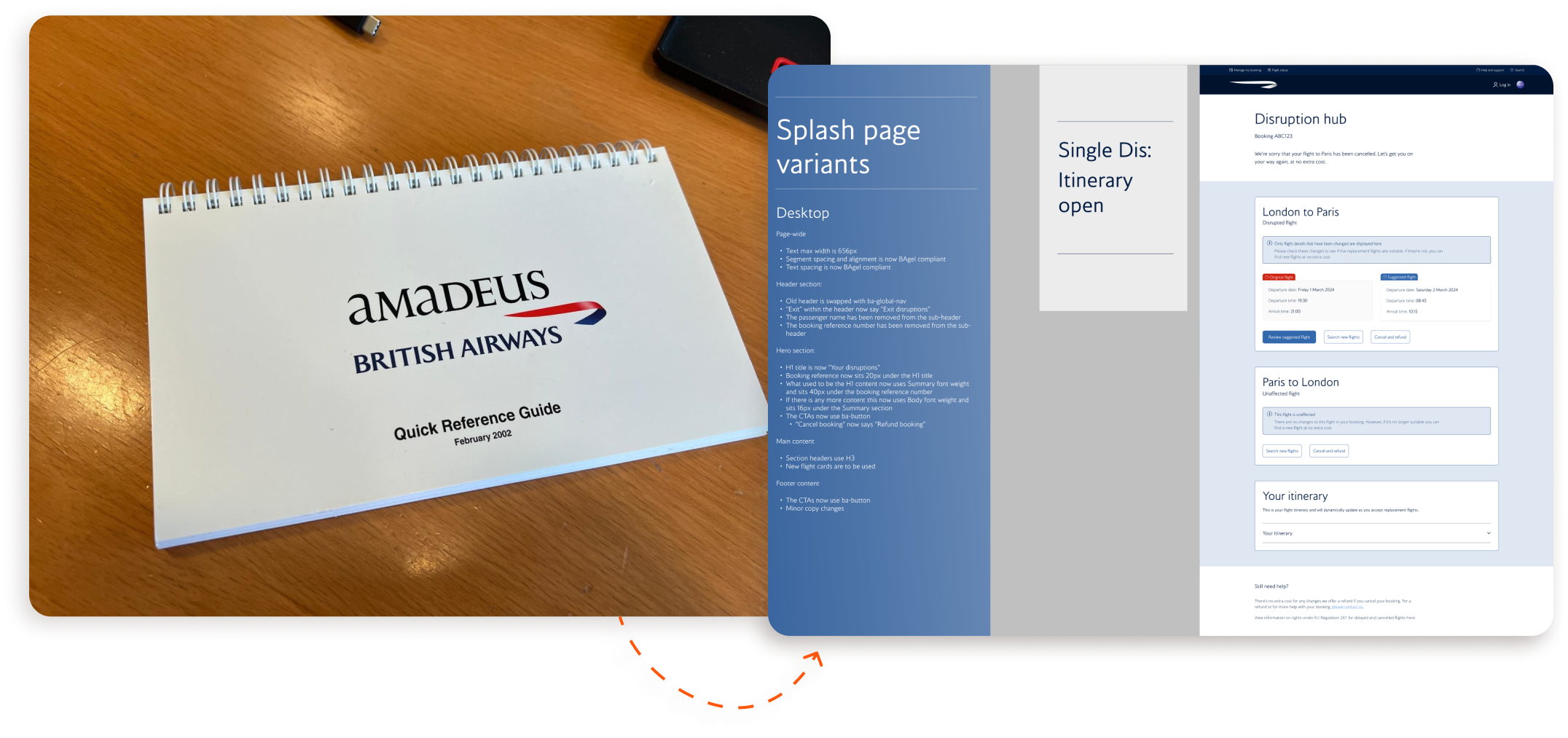
In the 20+ years since our product had been live, Amadeus - the backbone of our tool and the aviation industry - has evolved and can now deal with far more complex scenarios. Our front-end had not.
Complex disruptions involved two or more connecting journeys that had at least one flight automatically rebooked by BA while the others hadn’t been, requiring the user to fix it themselves. This was surprisingly common.
In these cases, the customer would have to call BA and for £14 per call for BA, the call centres were costly. Allowing more people to self-serve was, therefore, a no-brainer for driving down unnecessary business costs!
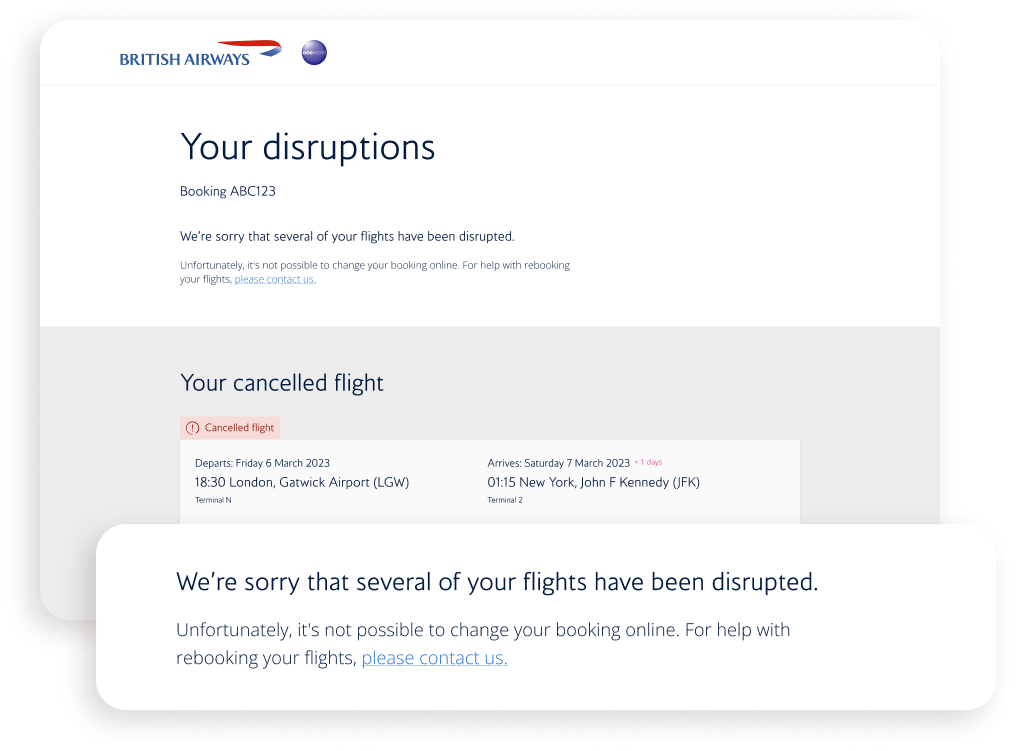
Invol reimagined
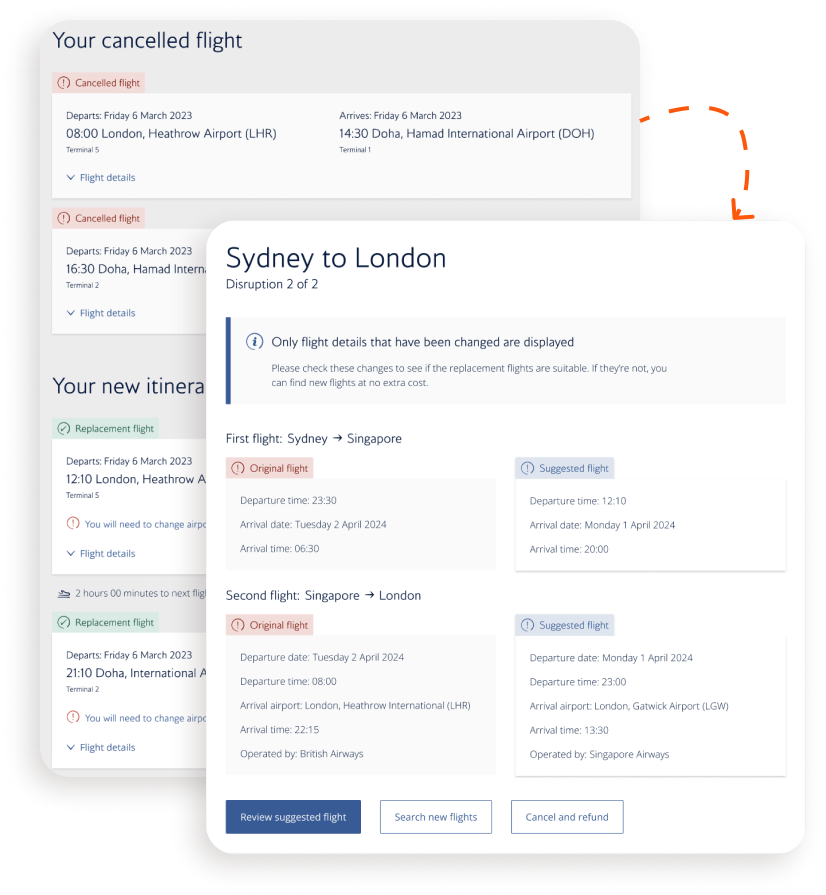
Spotting the difference
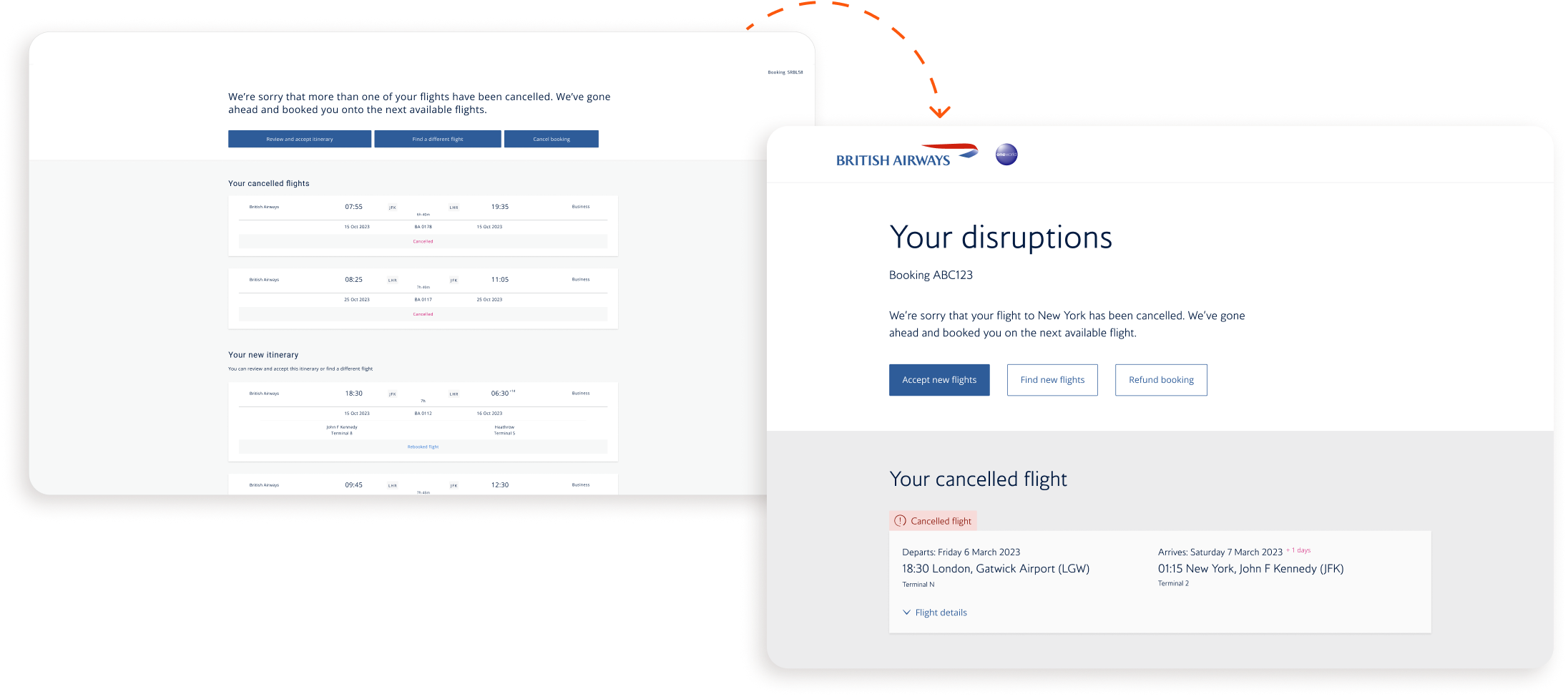
Using progressive disclosure and a side-by-side design, we created a UX that handled complex scenarios. It’s simplicity and clear messaging also meant that users missed far fewer key details - from 60% to just 8%.
Making invol make sense
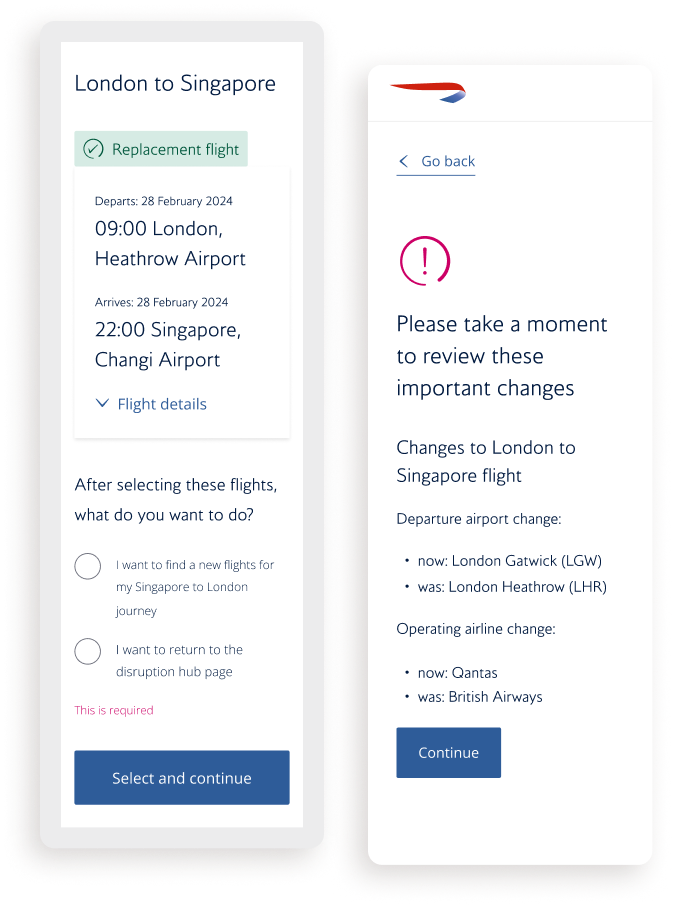
Adding little bits of friction, in the form of summary pages, after accepting or choosing new flights, drastically reduced the number of overwhelmed and confused users, who made up almost 1/3 of our calls.
A personal touch
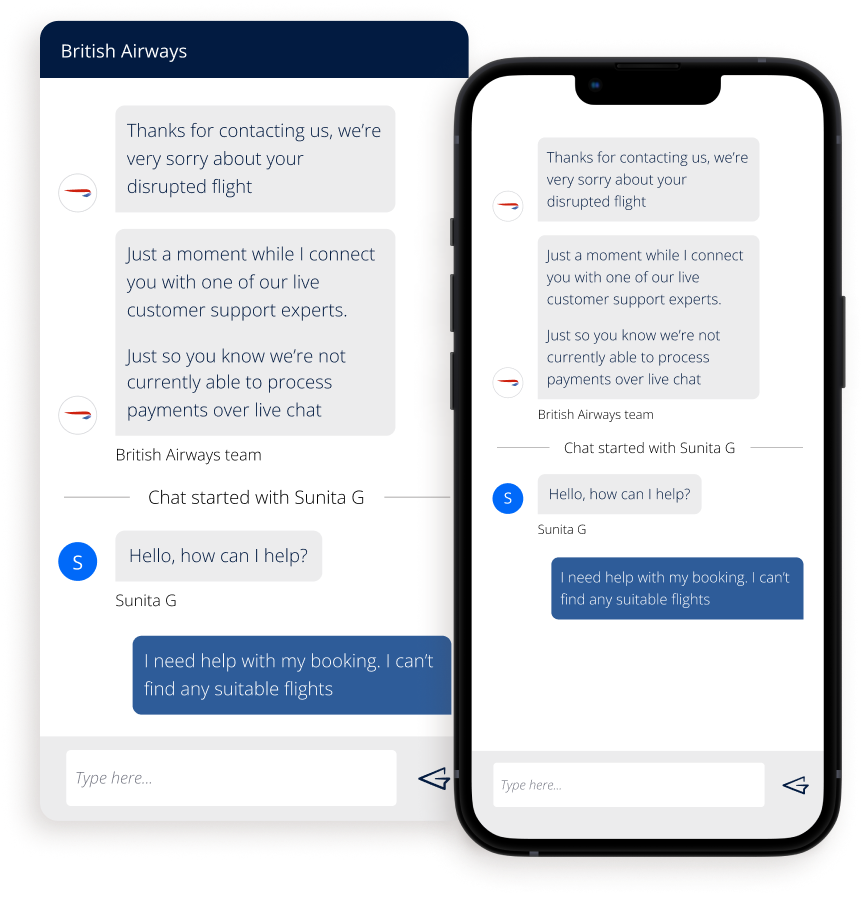
We introduced live chat, allowing users to speak with someone—a major request from 66% of people we interviewed. This took pressure off the call centre, as live chat staff could manage multiple conversations at once.
Initial success
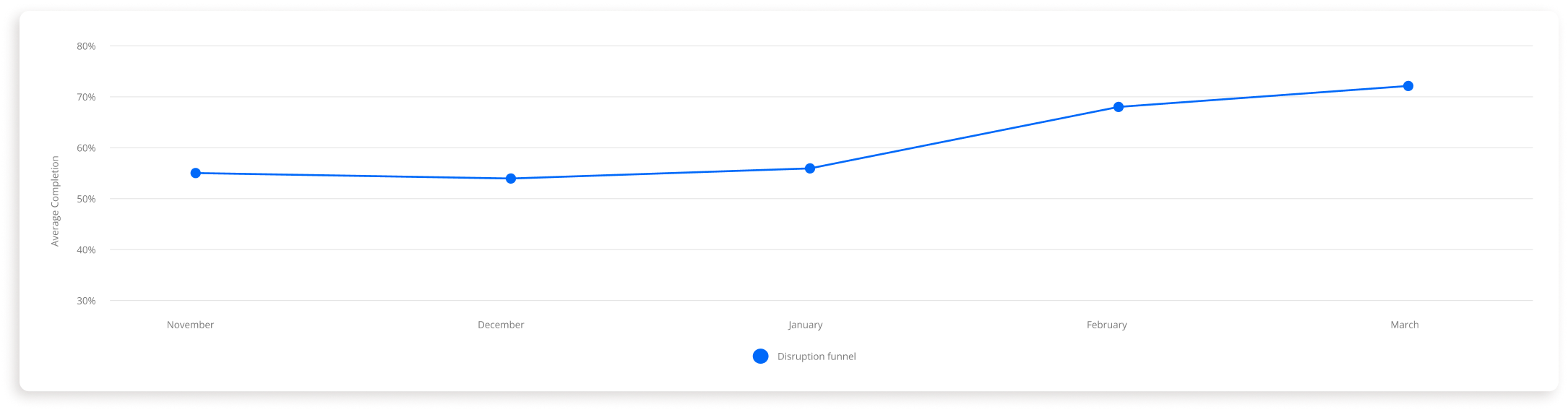
While our product still couldn't handle paid for extras or on the day disruption - issues to be addressed on our new tech stack - we significantly improved the user experience. Improving the design in this way contributed to a modest 14% lift in number of users able to successfully resolve their disruption online and without any intervention from the BA call centres by the time I moved over to the replatforming team, leaving BA.com behind.
Bringing invol to our app
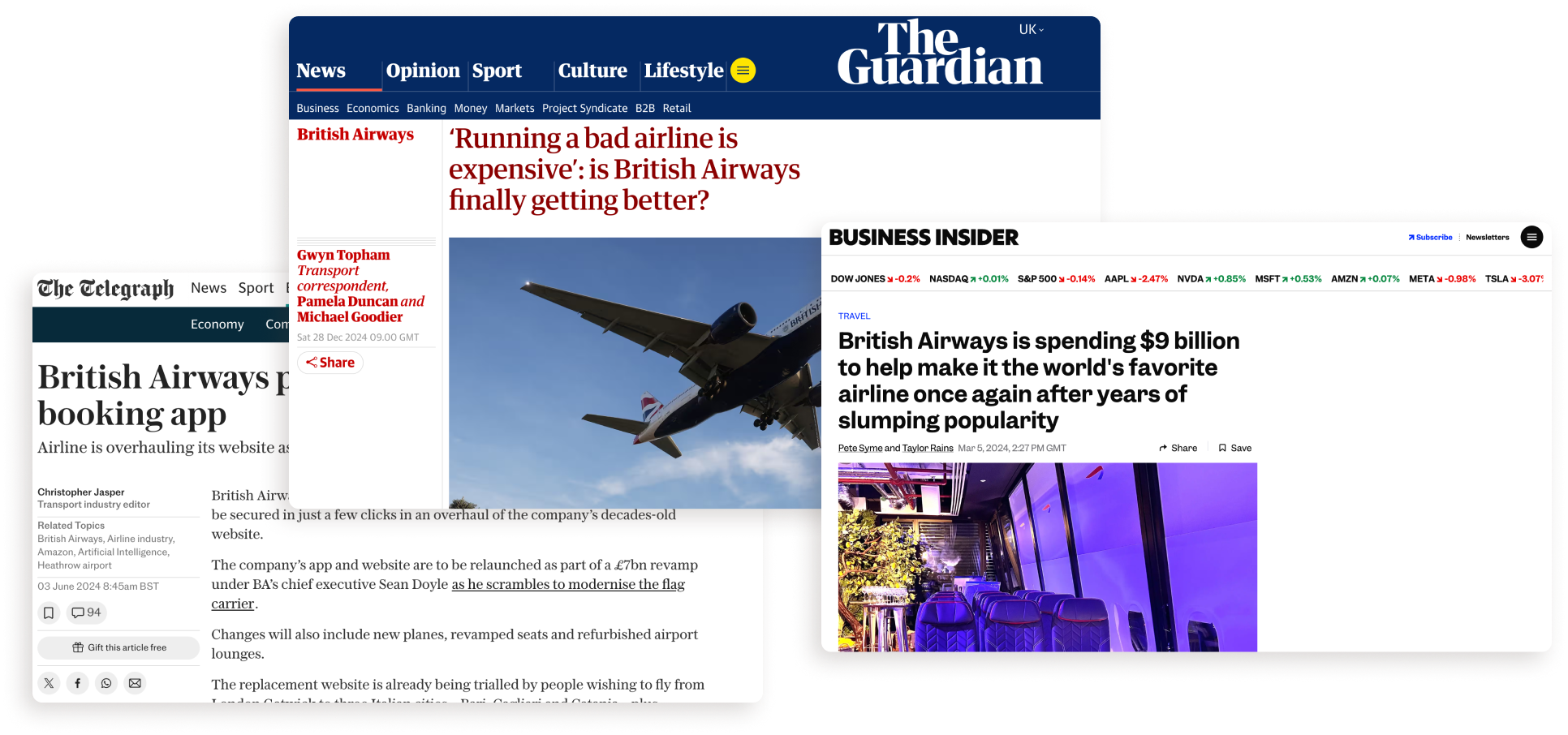
Having completed phase one, and with designs and testing either already done or well underway for phase two, we now looked at how we could leverage the new technologies at our disposal to create an industry leading product. Whilst I wasn’t at BA to see the new app go live, the work we did laid the foundation for the whole organisation would rethink how it managed disruption going forward.
starting afresh
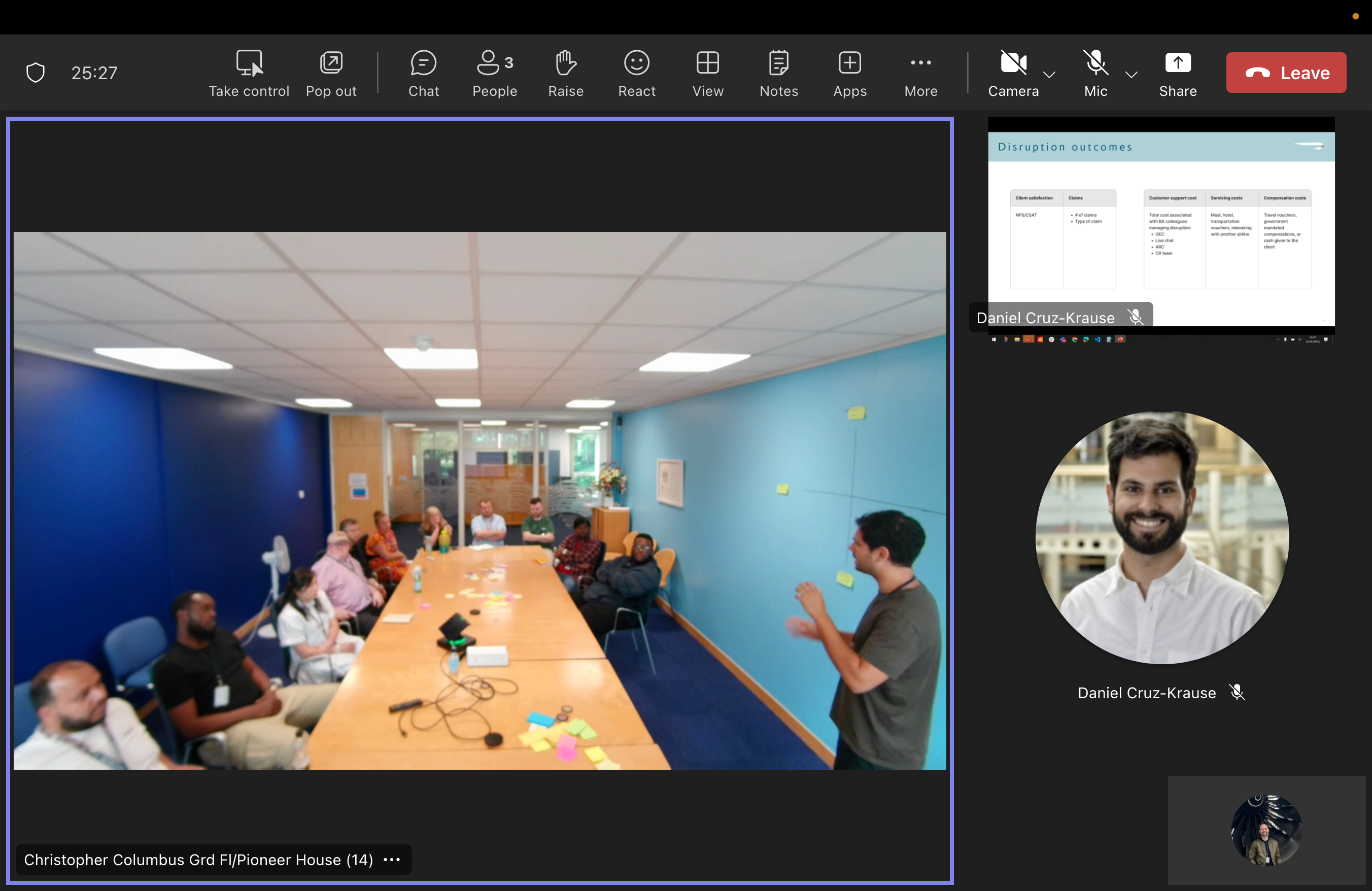
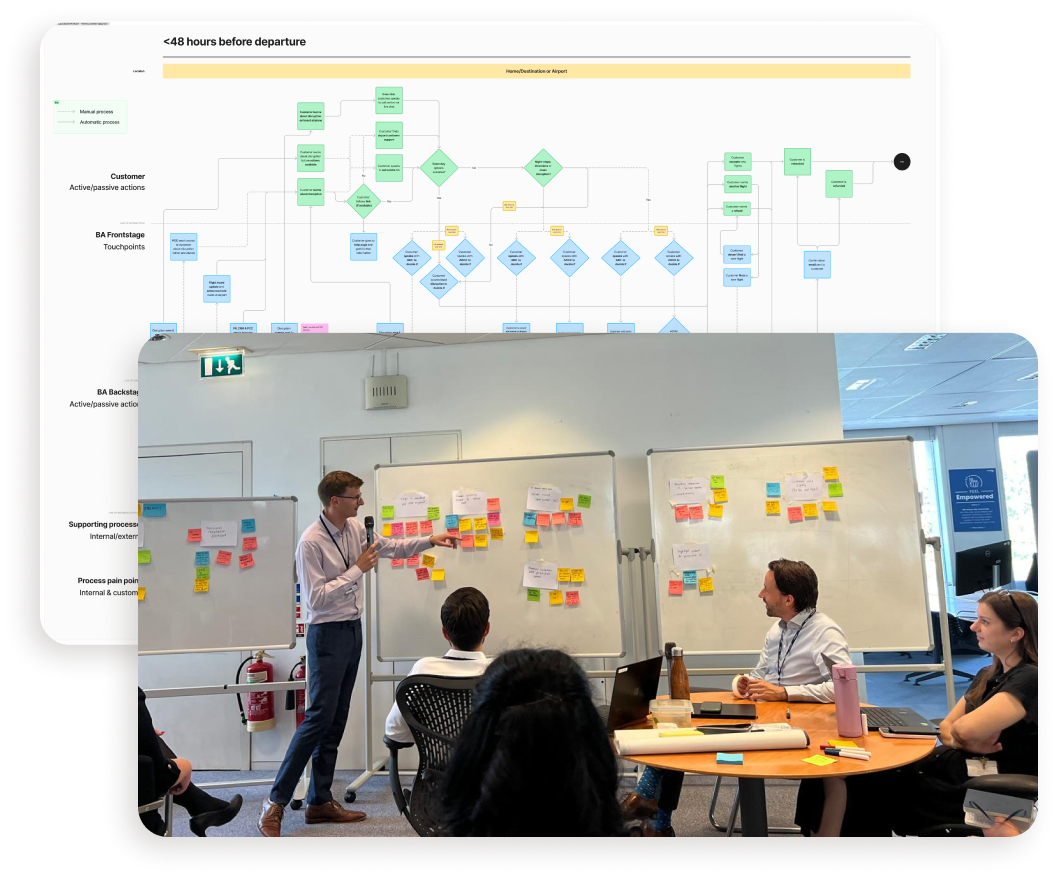
Casting the net wide I led a design sprint with teams from across BA who handled parts of disruption, such as airport operations, CRM and the call centre.
This built relationships and created alignment, allowing me to follow-up with a thorough service mapping of disruption that visualised its problems and where they sat.
This ultimately led to an organisational redesign. Digital was no longer an afterthought, it was driving disruption - and the direction was a new and fully integrated end-to-end experience built into on our new app.
Invol For app
democratising disruption
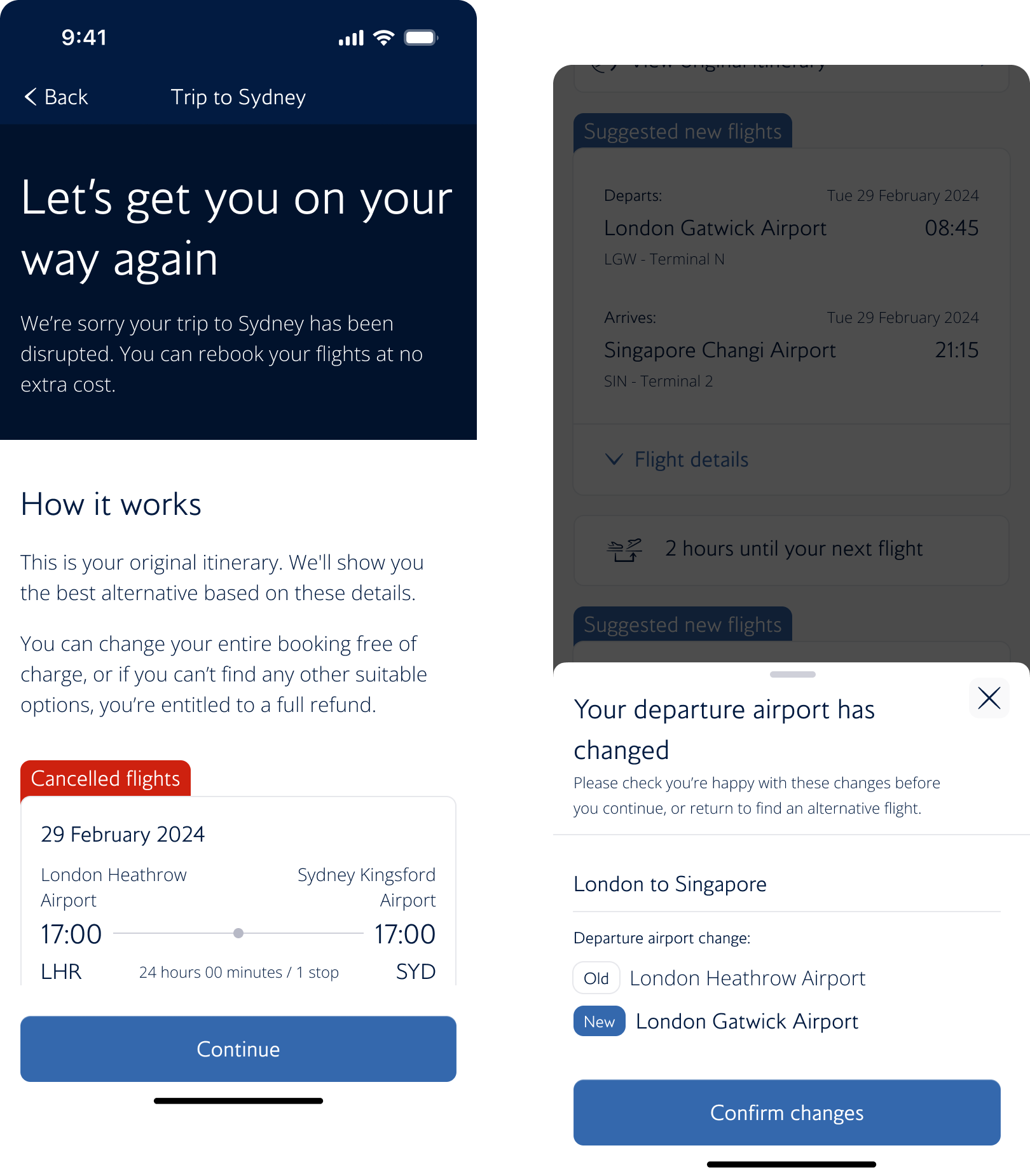
Designing for mobile was a different proposition. Achieving a 95% success rate when we tested a prototype in Heathrow, new pages and ways of catching the user allowed us to create a truly robust disruption tool.
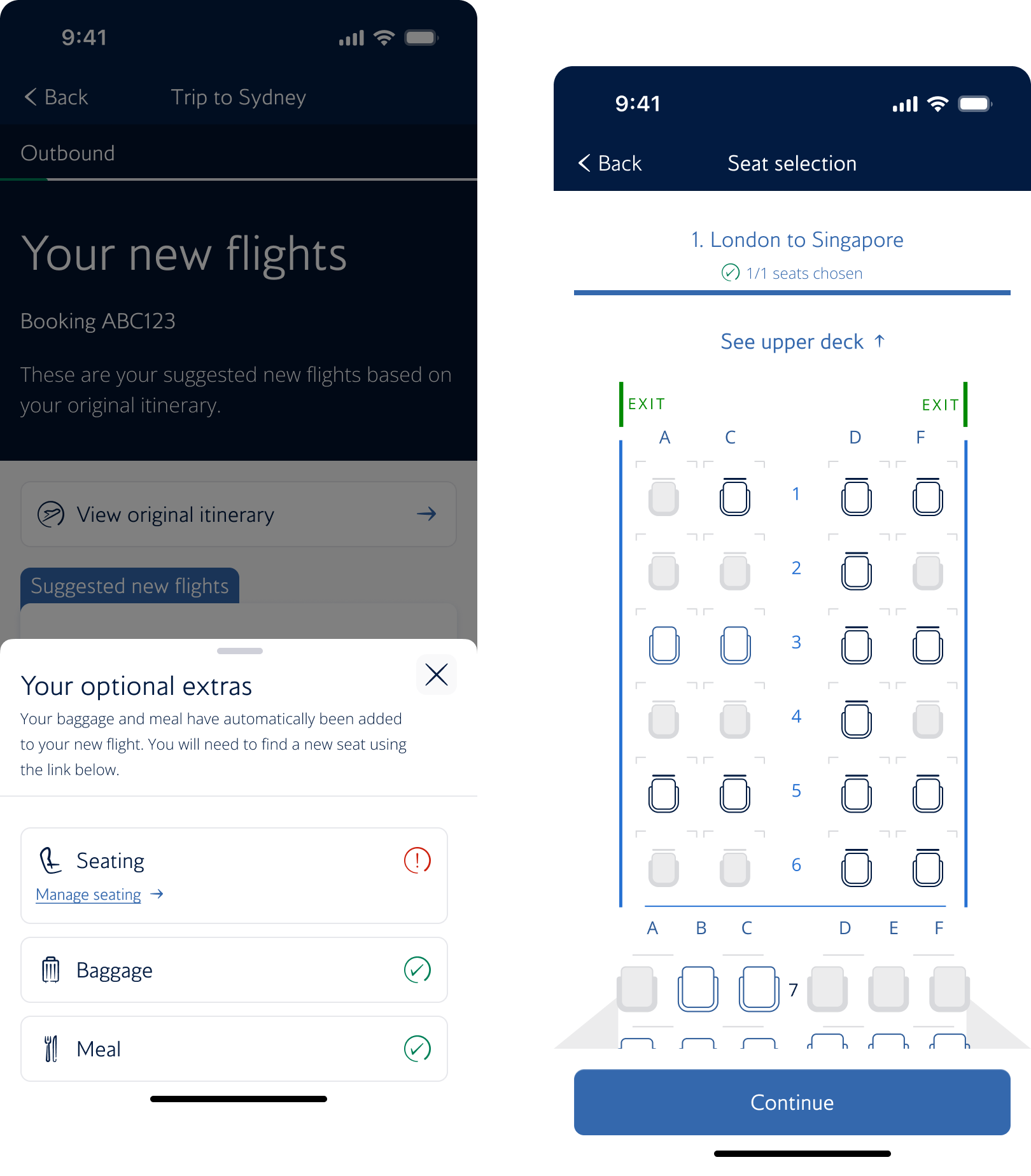
Adding ancillaries
Answering the 88% of customers demanding information about extras they had bought, we achieved this by allowing users to manage everything from seating to baggage within the new disruption tool.
digitising compensation
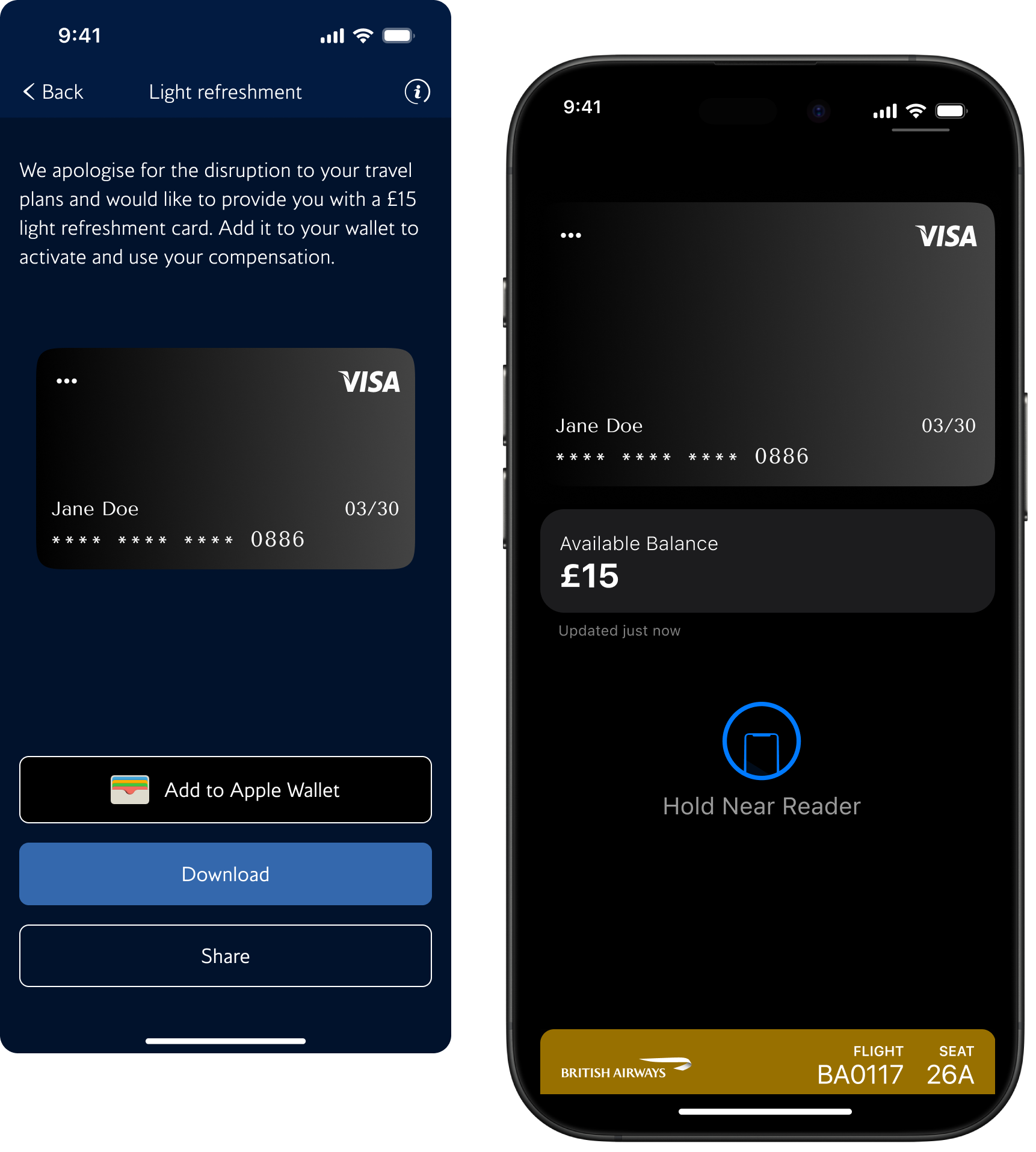
A little known part of BA’s disruption offering is that we offer customers light refreshment vouchers. These were, however, paper based. With our new remit, we digitised that and made it super easy to access via the app.
Invol 2.0
Sadly I didn’t get to see the project through to completion, however, the pride I feel having dragged Involuntary Disruption out of the dark ages and into the 21st century is something I’m very happy about and I look forward to seeing how it continues to evolve.
What I learned

1
Leadership: Starting out in a product squad that had little to no design experience was a significant challenge, but it presented an opportunity for me to step up into a design leadership capacity, something I enjoyed and really hope to continue.
2
Accessibility: Learning about and utilising an accessible design process has been one the most important things I’ve developed while at British Airways, evolving my skills and teaching me to see design through this important lens.
3
Rapid testing: Getting very familiar with User Testing and working with some very talented researchers, I learned the importance of rapid user testing to gather useful insights quickly. This enabled me and my squad to make quick decisions when needed proving invaluable.
4
Taking the initiative: Whilst this mightn’t be something I learned to do at British Airways, it is something I developed. When there was a need to work on something unfamiliar (such as the boarding pass) I didn’t pass on the opportunity, always seizing on them to develop my skills.
Want to see more?

G4S
CARWOW


@canrogersdesign 2026
