


SELL MY CAR
PRODUCT DESIGN

From zero to one, my team and I built and refined the dealer side of Carwow's new car-buying platform, Sell My Car. We took it from MVP to its first million-pound month in just over one year.
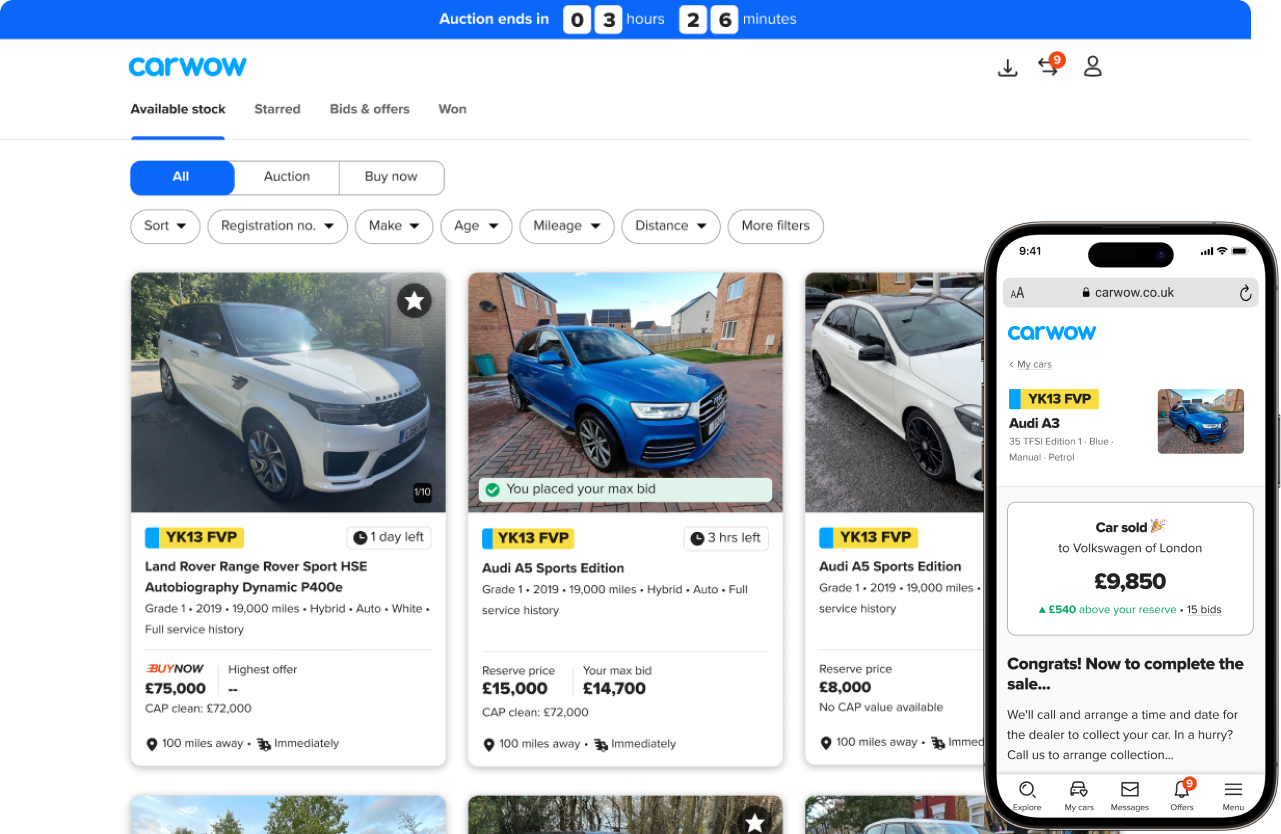
Summary
HIGH STAKES AND HIGH STANDARDS
When I joined Carwow's new Sell My Car tribe, they'd just acquired Wizzle — a dated platform for used-car dealers to buy stock directly from consumers. I owned the dealer-facing side end-to-end, redesigning and rebuilding it as a Carwow product while in constant dialogue with the dealers who'd actually use it.
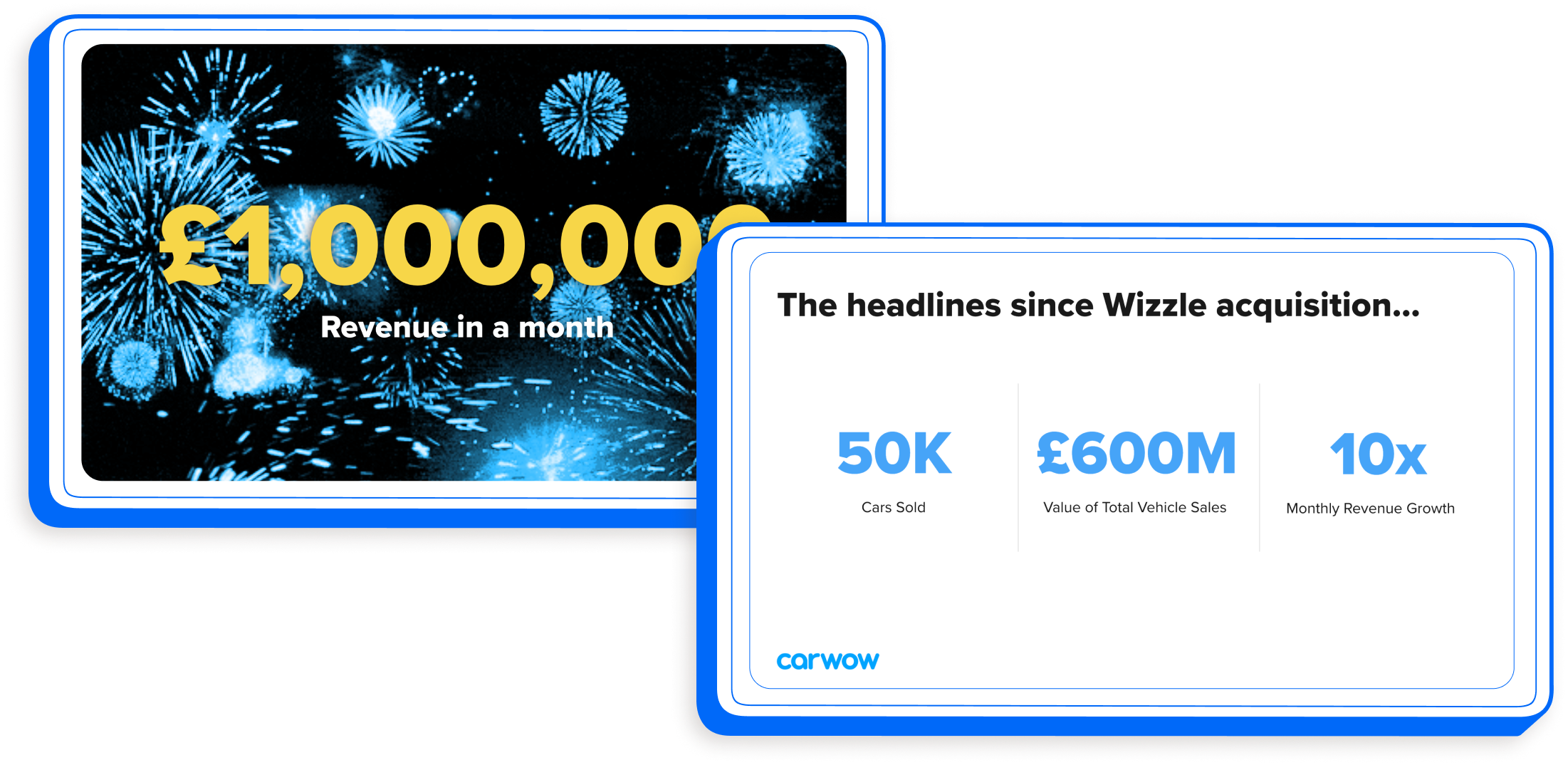
Working closely with my PM and engineers, we took a start-up making under £100k a month and scaled it to its first million-pound month in September 2022 — a tenfold increase from acquisition.
PROJECT TIMELINE
Aug 2021 - Nov 2022
ROLE + RESPONSIBILITY
Product Designer — owned the dealer-facing product end-to-end, from discovery to post-launch iteration
TEAM + TOOLS
Cross-functional agile squad (PM, lead designer, engineers)
Figma | Maze | Quantum Metric | Notion
THE problem
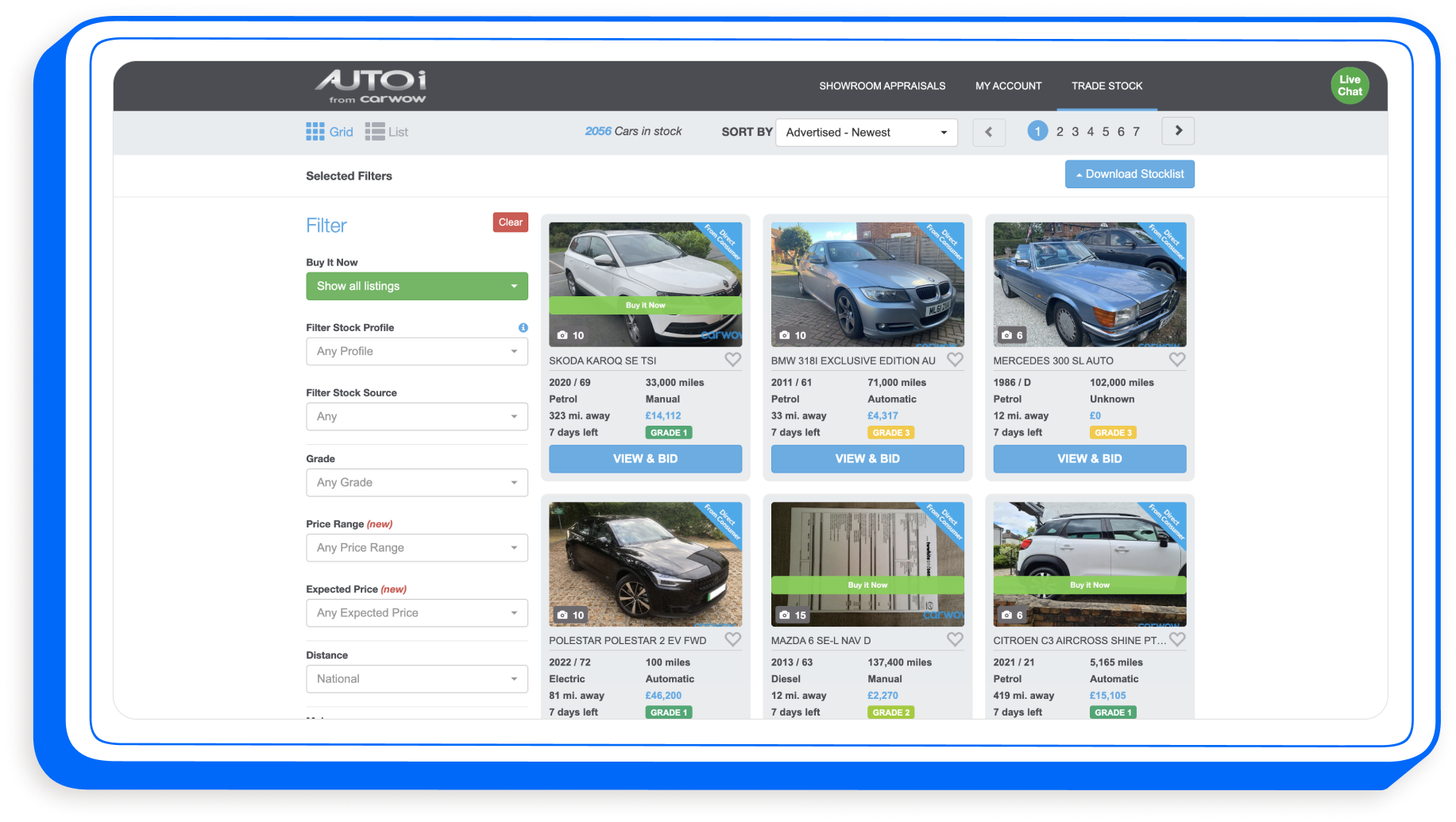
The platforms we inherited — Wizzle on the consumer side, AUTOi for dealers — were built by PHP developers in 2012 with no design process. Broken filters, an antiquated notification system, listing cards missing key information, pages dense with data but no hierarchy. For time-poor dealers trying to find and buy stock fast, it simply got in the way.
The Solution
Across 13 months, during my time in the Sell My Car squad working on this product, the work spanned several phases, but the core insight stayed constant: dealers wanted a reliable, trustworthy way to buy used cars, fast. That gave us a clear roadmap from MVP to a genuinely loved product.
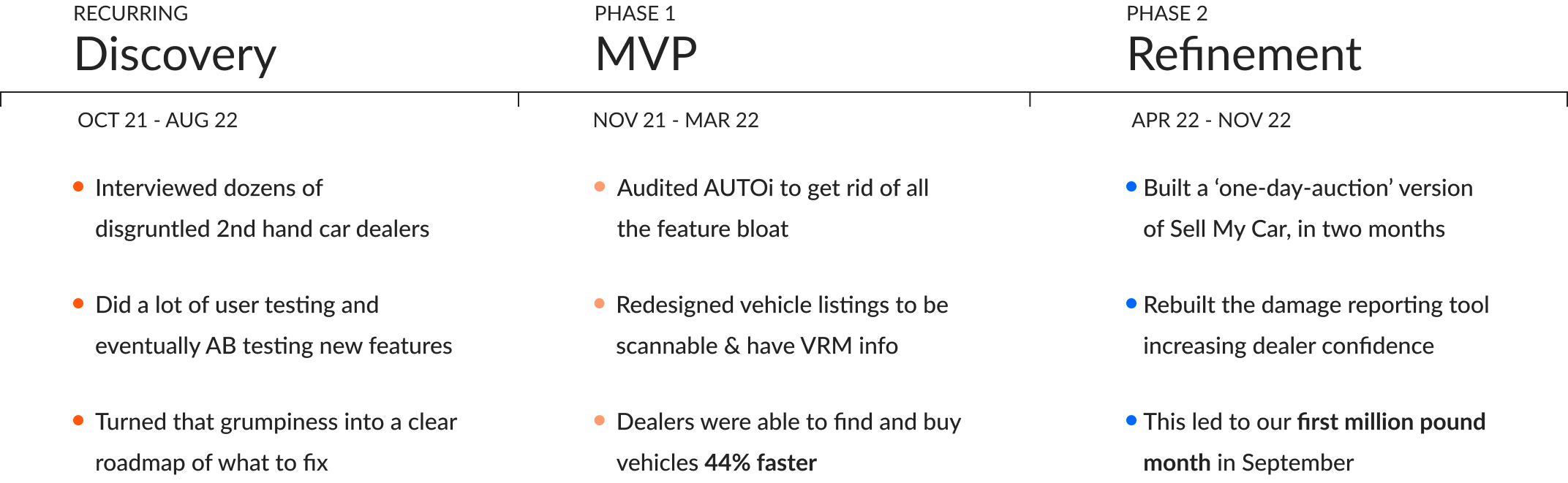
Recurring - Discovery
Understanding AUTOi
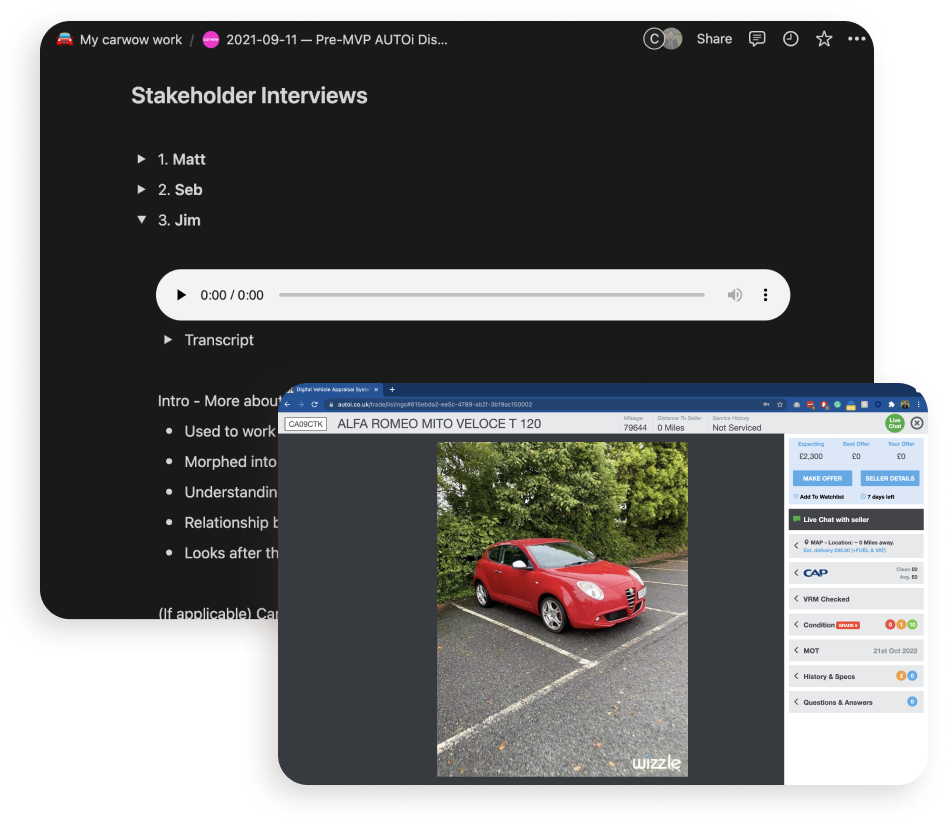
One of the first things we needed to get to grips with was how the dealer-facing platform - AUTOi - worked (or didn't, for that matter). We kicked things off first with some stakeholder interviews.
We soon learned that it was put together without any designers or any real process. Using AUTOi and talking to the team made it clear that large parts simply didn't work or had to be 'hacked'.
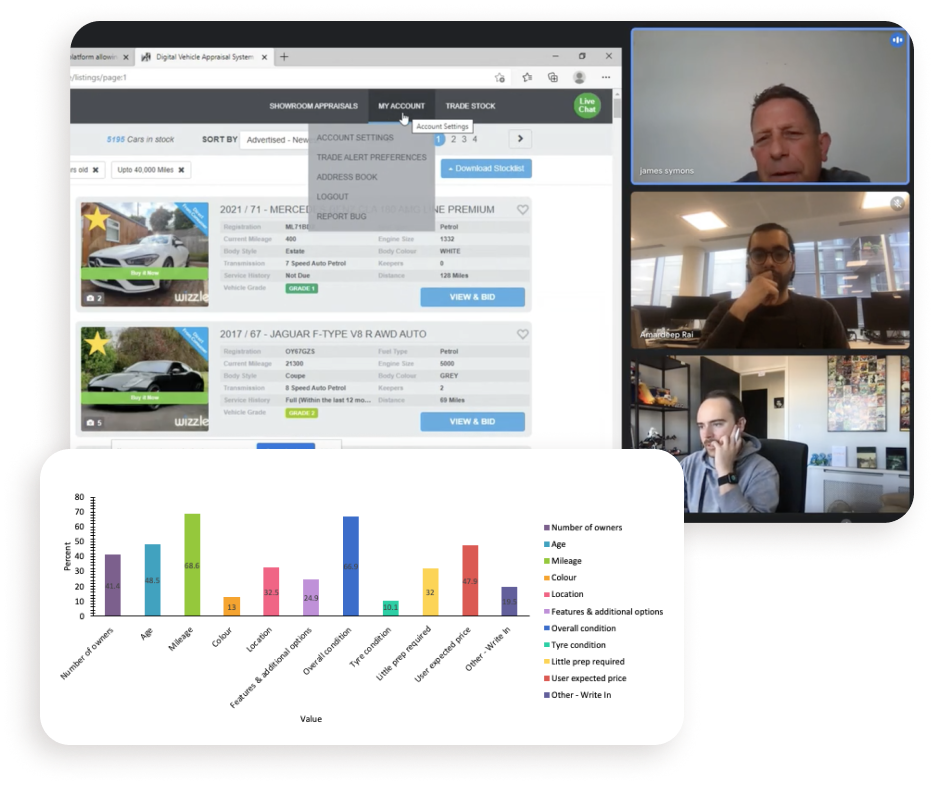
Talking to our dealers
Since so few dealers used AUTOi (roughly 1000) and the tracking was non-existent, there was no data to work from at the start. Instead, interviews, contextual analysis and surveys were our paths of discovery.
The picture was consistent from all of the studies we did: dealers were time-poor, frustrated by broken features, and badly served by poor-quality listings.
Using data to refine
As the product matured and tracking was added we were able to use data to set up experiments, which was very helpful when improving the almost incomprehensible damage questionnaire when we refined the MVP.
Data could only get us so far, however. We had to run surveys, card sorts and in-person user tests to understand how to get sellers to list their cars as accurately as possible.
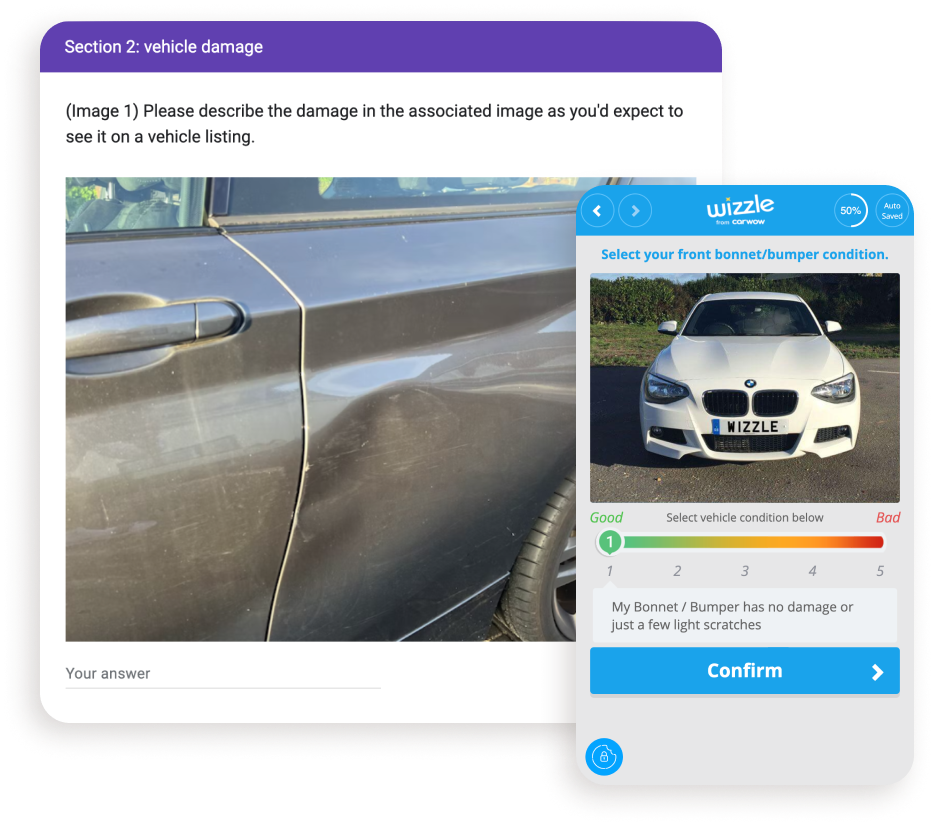
Carwow’s used car dealers
73%
of dealers ignored ‘spammy’ emails
73%
of dealers felt listings lasted too long
86%
of dealers were very time poor
93%
of dealers needed better-quality listings
phase one - MVP
Making the mvp
AUTOi was a functional but slow tool for dealers to use. Being time poor, in an extremely competitive industry with very tight margins meant AUTOi wasn’t cut out for the job. I audited it, stripped the redundant features, and rebuilt the information architecture around progressive disclosure so dealers always saw the most relevant information first.
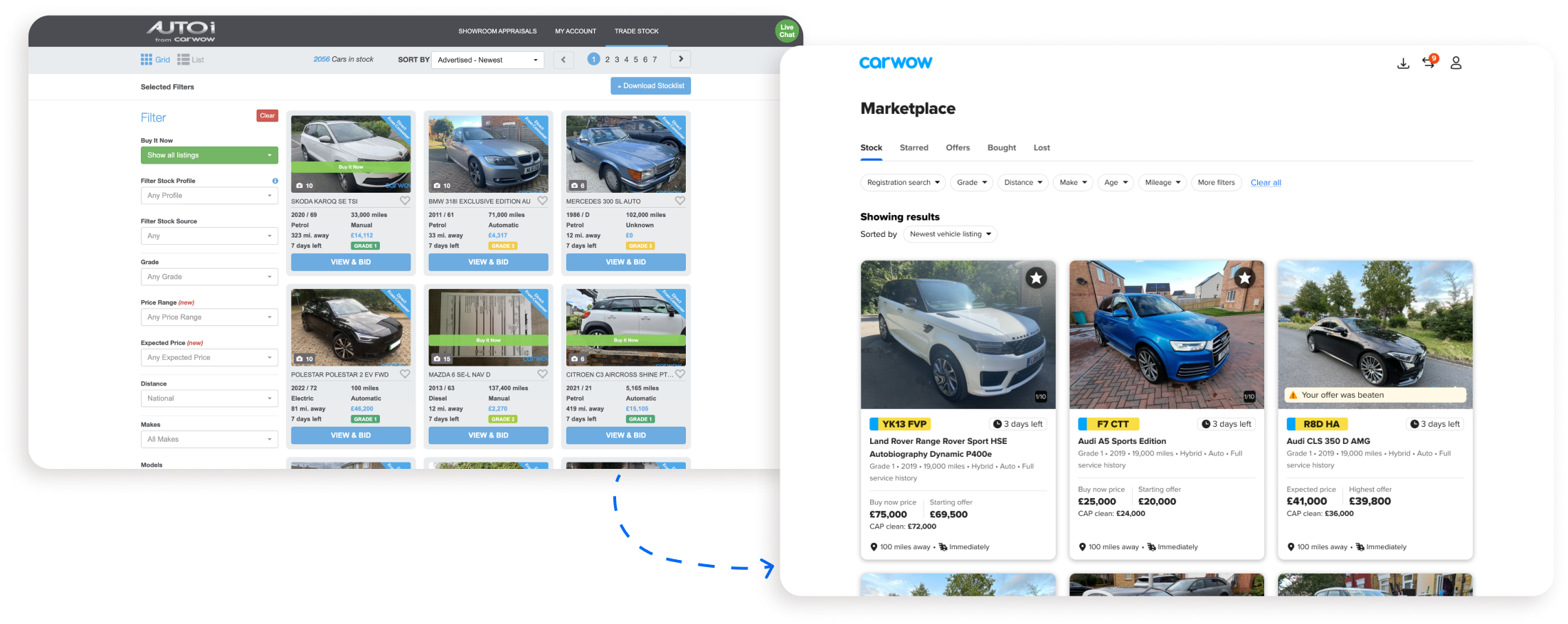
Testing the waters
Some fixes were simple but high-impact — such as adding VRM search, which dealers used constantly to track cars. Others meant rethinking the listing cards, which had hidden key details forcing dealers to click each one.
Since these changes were so significant, we ran multiple user and gut tests using Maze. This gave us a clear sense of dealer preference, and during user testing dealers completed tasks 44% faster than with AUTOi.
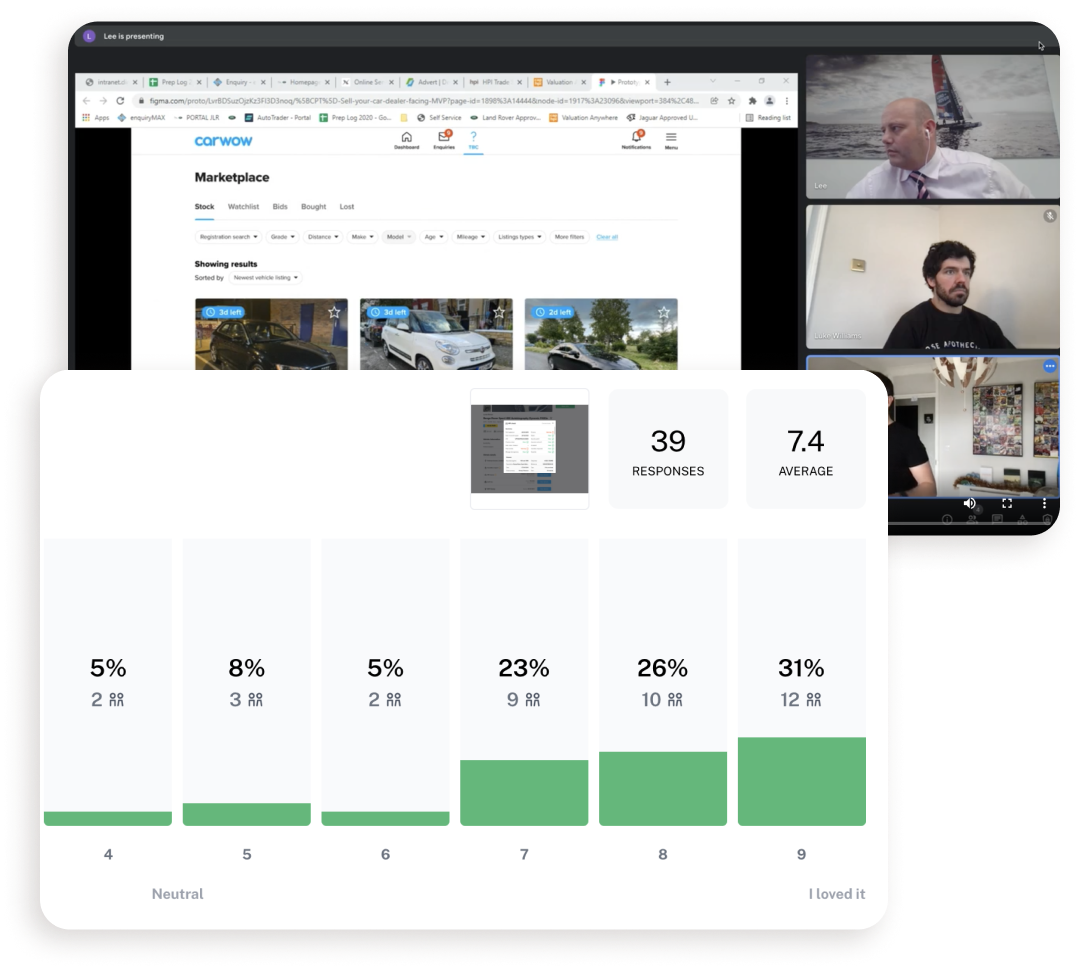
clear documentation
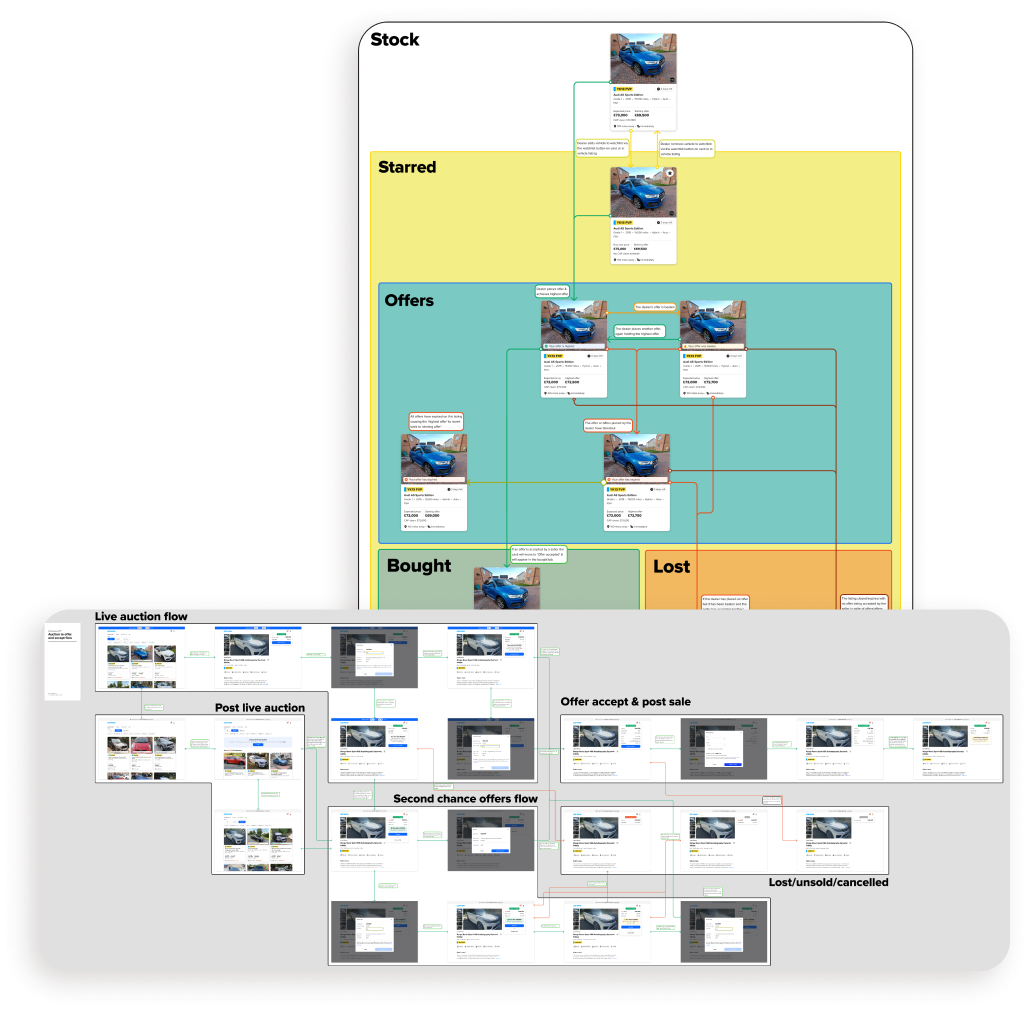
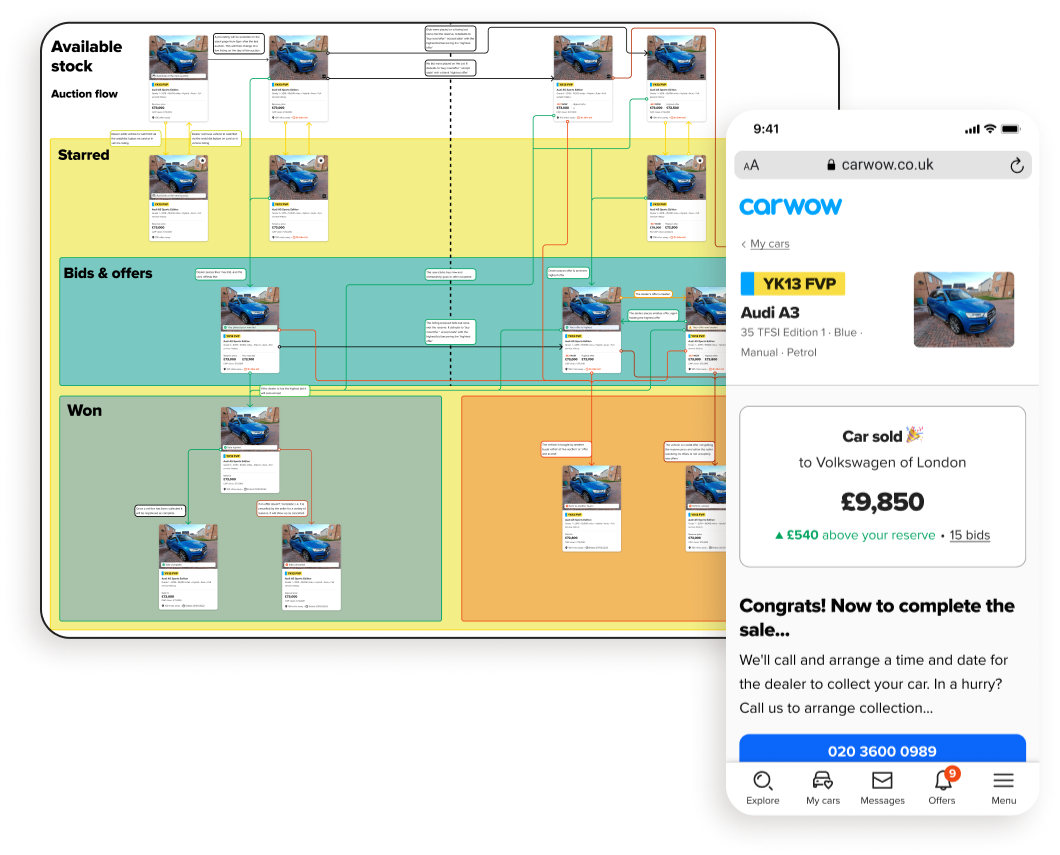
When a car listing goes live on Sell My Car, it can go through multiple states. This means the logic linking them was quite complex. Documenting it clearly was essential for the devs to put it all together.
Final MVP Designs
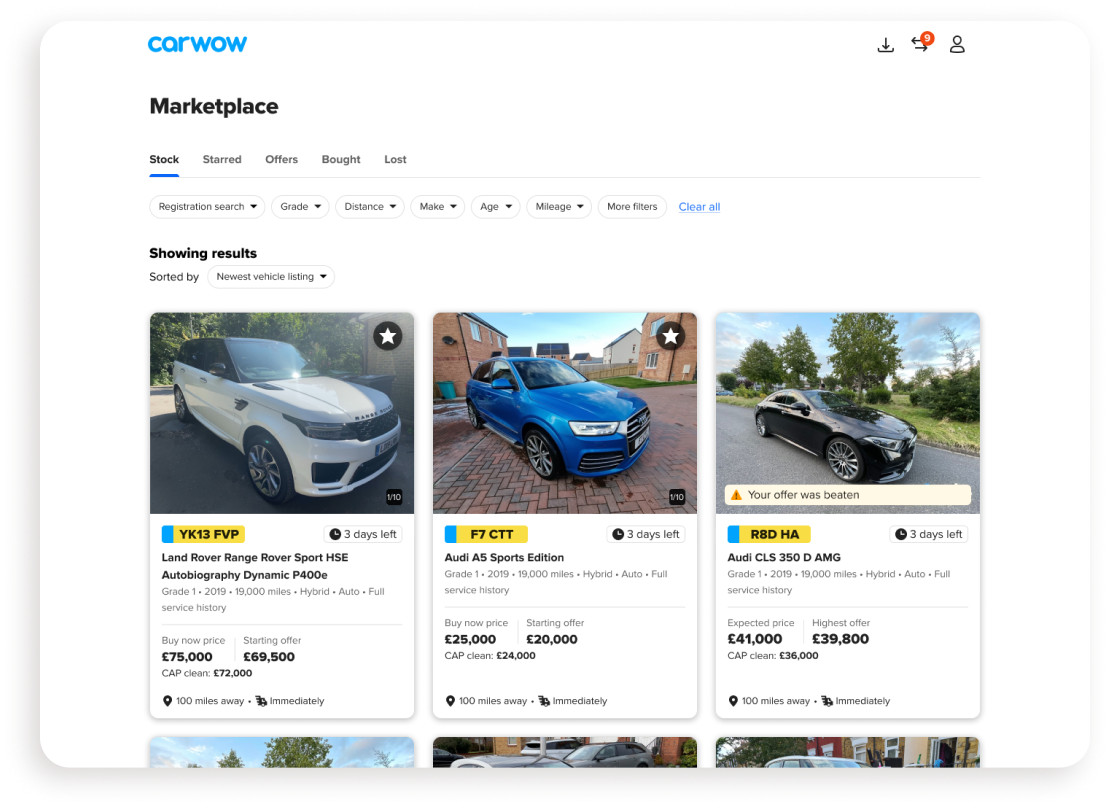
Rethinking the user’s experience
Stripping away AUTOi’s redundant features and rethinking the information architecture greatly simplified the MVP making it easier for dealers to find and keep track of cars they wanted to buy.
saving user’s precious time
Another time-waster for dealers was AUTOi’s listing cards. They missed key info (e.g. the VRM & correct pricing) and had tiny images, meaning dealers had to click on each to suss them out. We fixed that.
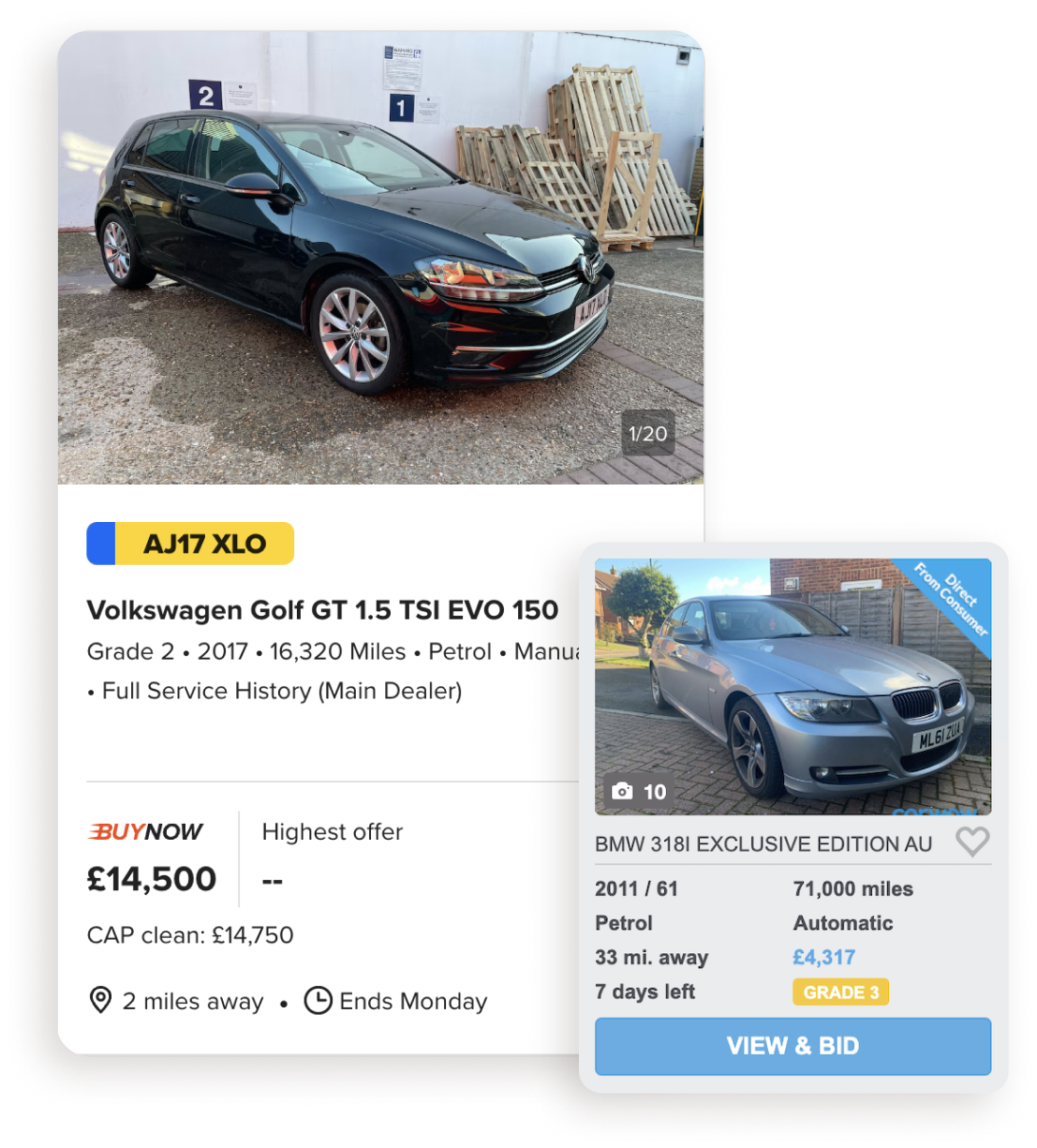
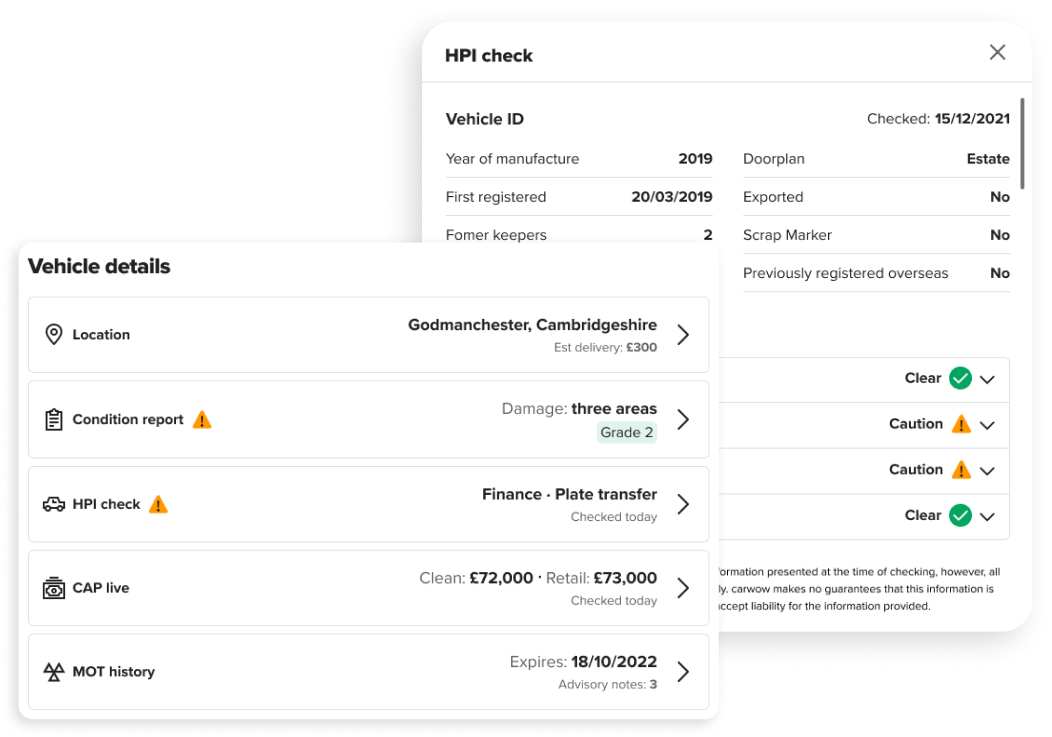
Only showing useful info to users
Understanding what the dealers needed to see and using progressive disclosure, we could make interesting vehicle listings easily scannable for dealers.
phase Two - Refinement
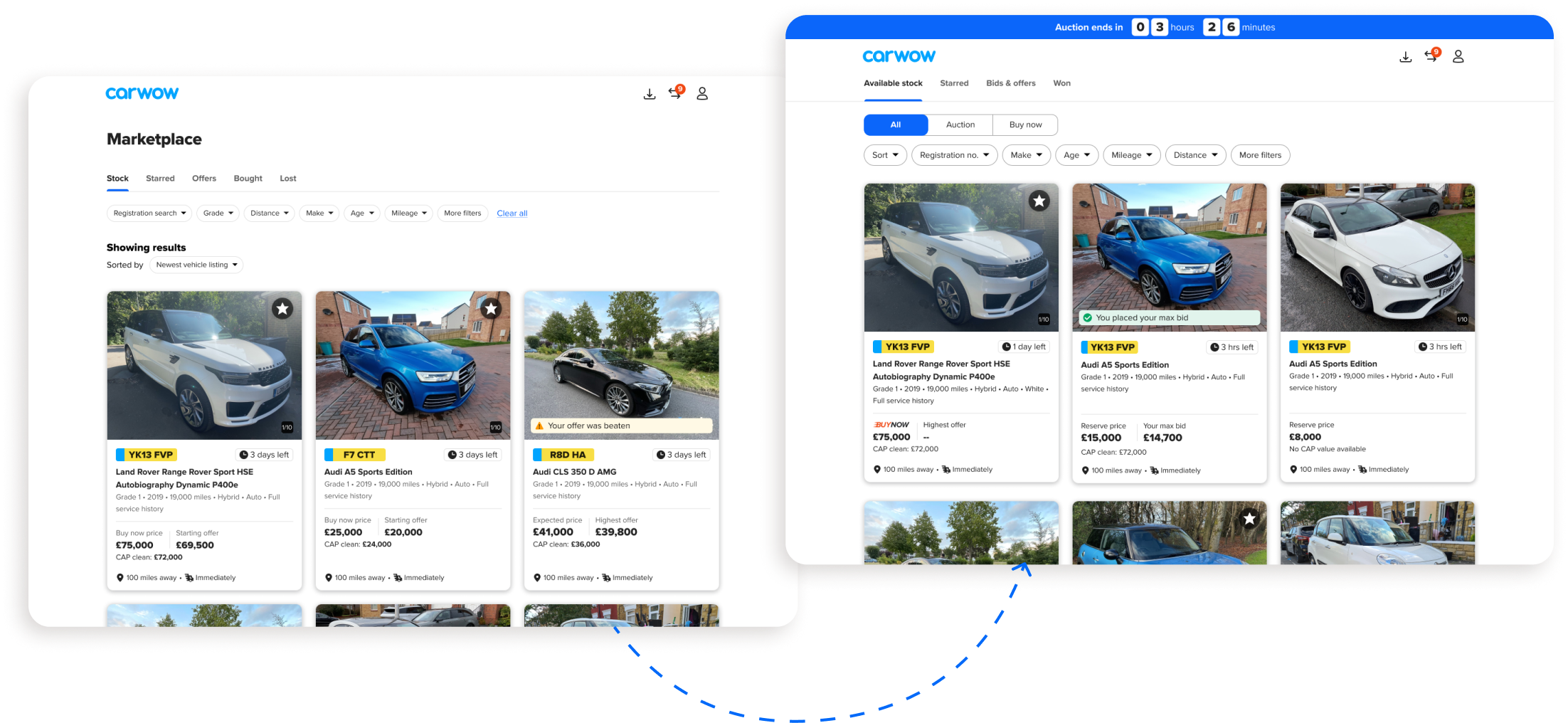
With the MVP live, two problems surfaced as we scaled. First, urgency: we'd reused AUTOi's old offer-and-accept model, but it drove no seller commitment. I designed and shipped a one-day auction model in a tight two-month window. Second, listing quality — the biggest pain point for everyone. The old condition questionnaire was almost unusable so we re-built to make sense, and helped design a photo-guide app to fix poor-quality images.
desperate times
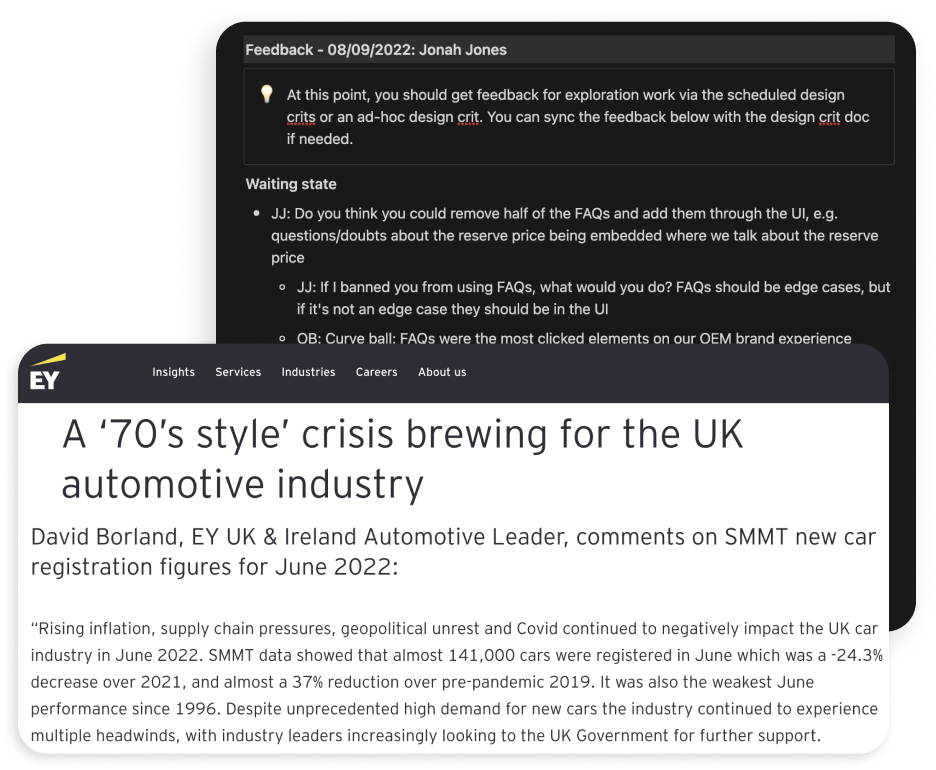
With the automotive industry heavily impacted by the semiconductor shortage and the war in Ukraine carwow’s main business, first-hand car sales, was severely impacted. Sell My Car had to work, in other words.
Low seller urgency was causing alarm amongst product leadership, who gave us two months to design and deploy the new ‘auction’ model. Not much time to do any research or testing...
Both sides of the coin
Given the urgency of this phase, I designed both the consumer and commercial experiences. These differed in approach due to how our users preferred to use carwow.
Roughly 80% of dealers used desktop, versus 90% of sellers who used mobile. Having initially worked on the seller-side, it was nice to dip back in and work mobile-first for a change.
Striking gold
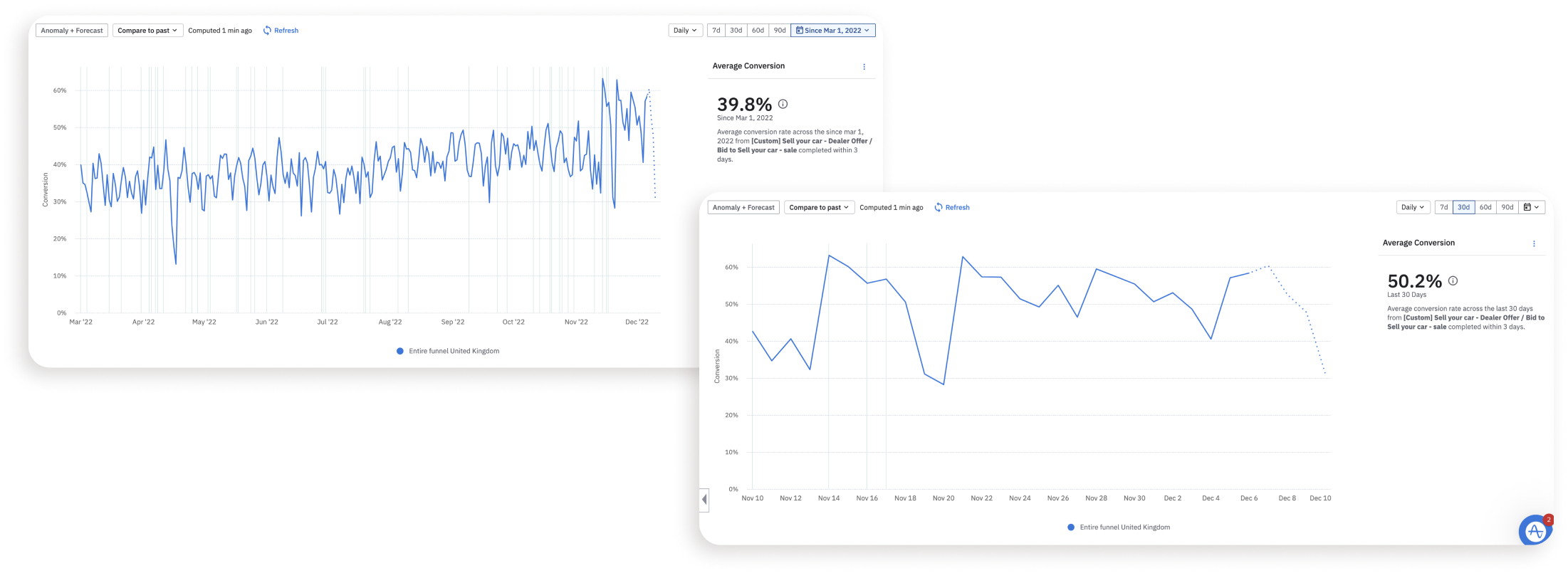
After the auction model went live at the start of November, we immediately saw positive trend in upload-to-sale conversion - often exceeding 60% on Mondays - with a 30% uptick in dealers attending and bidding. The auction also removed sellers' decision on whether or not they would accept an offer via the setting of a reserve price - eliminating the issue of ‘urgency’ and galvanising the sellers’ commitment to the sale.
Solving the question of quality
Solving the most significant pain point for dealers and sellers alike became a lengthy collaboration between Grant Silversword (Sell My car’s consumer designer) and myself. Capturing accurate info from sellers (images & descriptions) about their vehicle condition had been mishandled by AUTOi, with confusing language and no guidance throughout. We aimed to change all that.
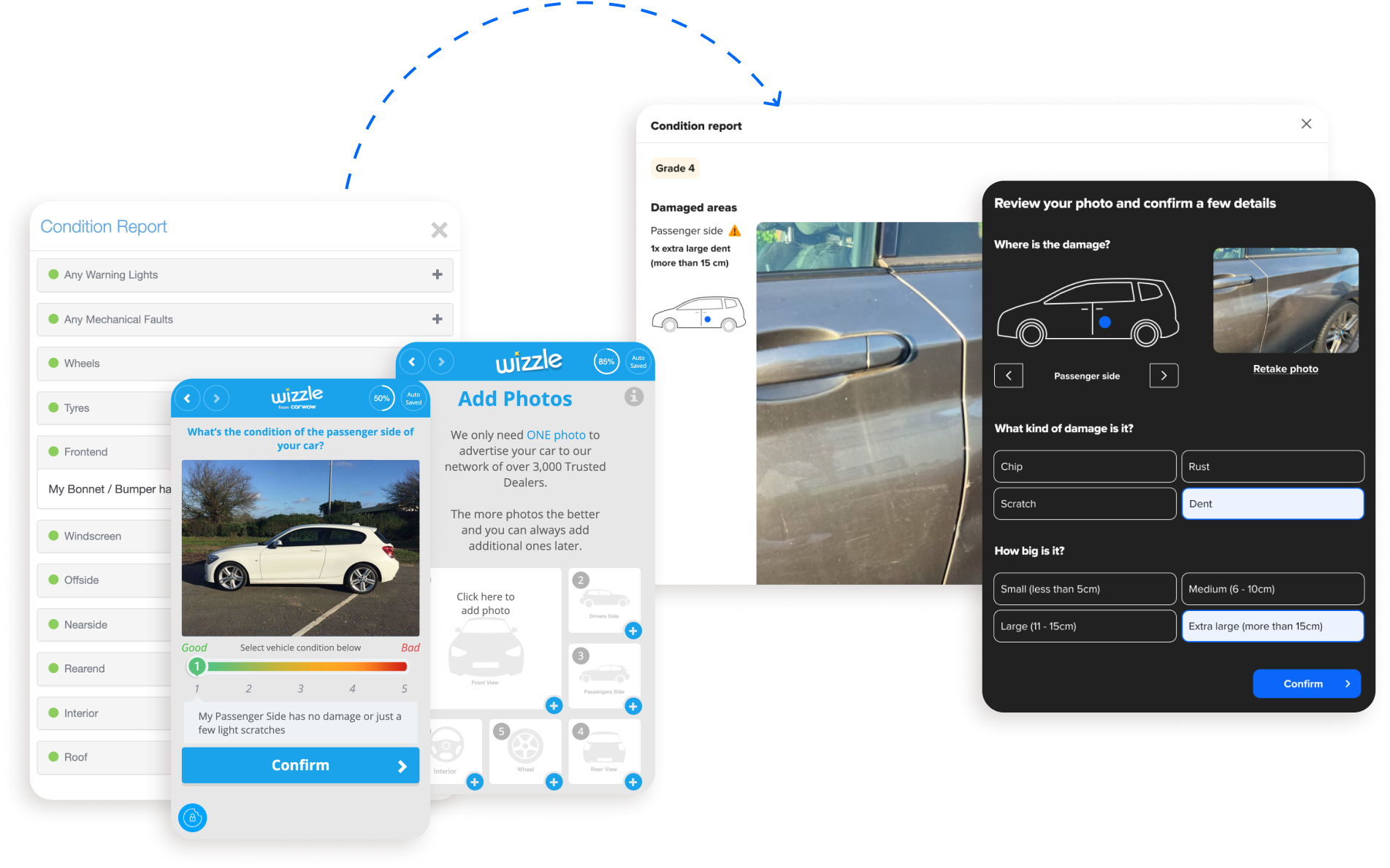
Cracking the taxonomy
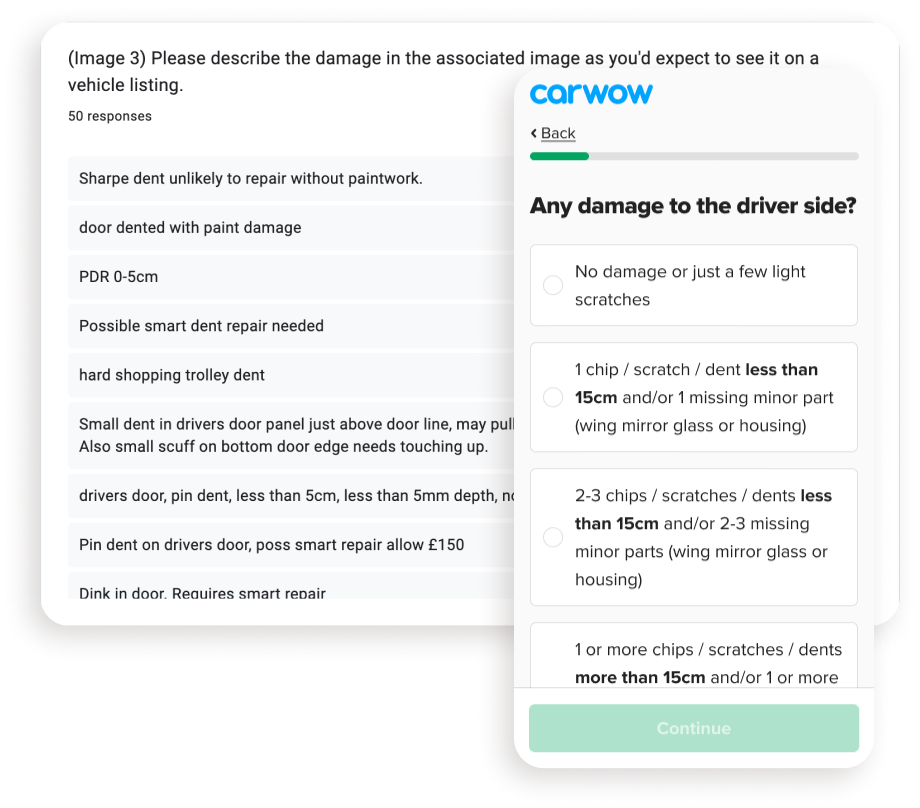
A major challenge we inherited from Wizzle/AUTOi, was the car condition questionnaire. This was crucial for accurately reporting a car’s condition - but the descriptions made little sense.
To give you an idea, this was one of four options to describe damage to the rear-end of a vehicle: ”1 chip / scratch / dent less than 15cm and/or 1 missing minor part (bulb, wiper blade, etc)”.
It’s easy to see why condition data was consistently bad. To solve this challenge, we conducted a survey and card sort of 100 dealers and 100 sellers to identify and implement the right taxonomy.
Polishing the pictures
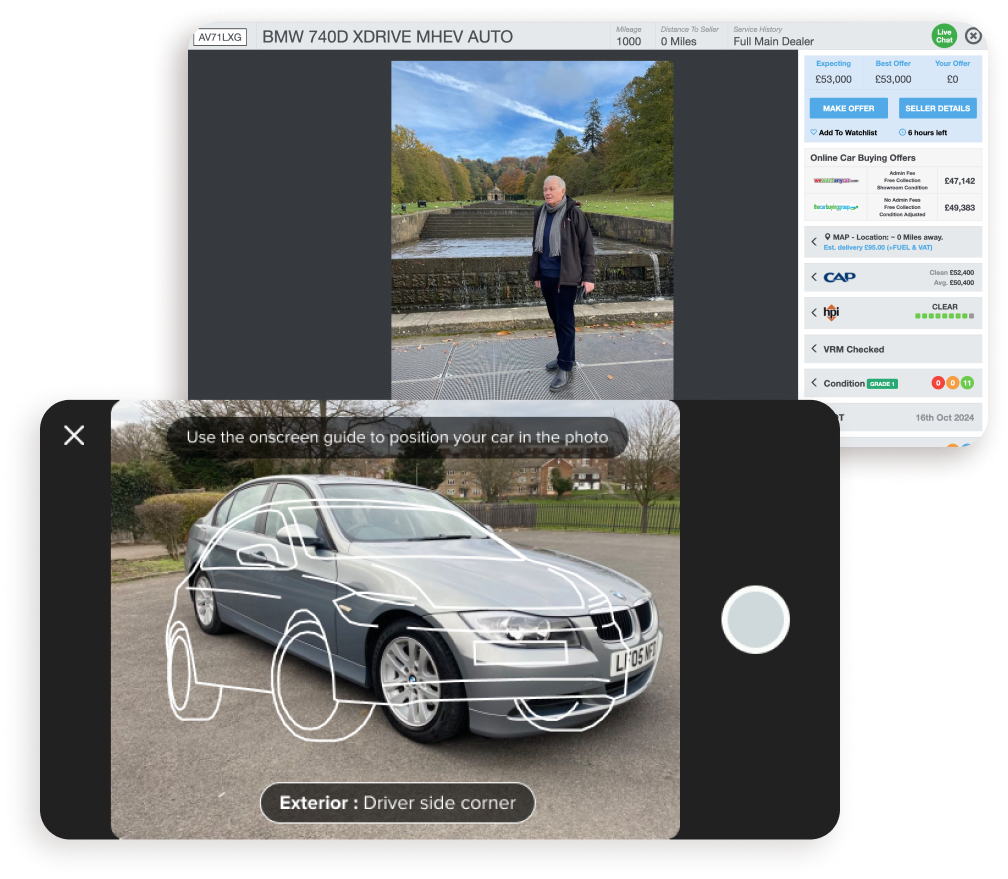
Wizzle/AUTOi, it turned out, didn’t capture images well either. Images uploaded tended not to be the up-to-date and clear pictures dealers needed to buy confidently - or even of vehicles at all!
A favourite included someone's grandad selling for £53,000 though I’m unsure how they handled collection. To fix this, I helped Grant design a photo guide app that he’d been working on.
The app went a long way to fixing this problem, but there was also a significant human QA aspect of vetting the images that we had a hand in, too - producing documentation and training materials.
Bringing it all together
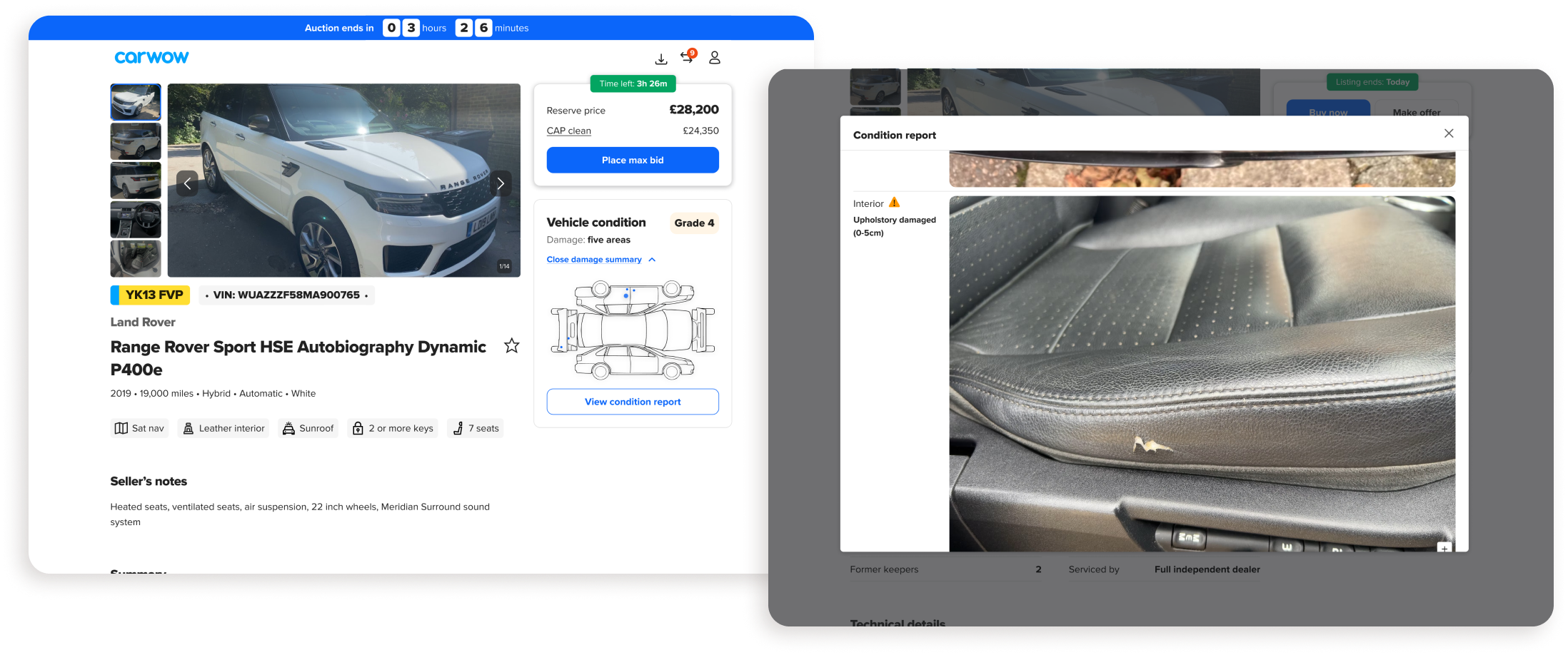
Somewhat unsurprisingly, the way vehicle condition data was presented back to dealers wasn’t great either. Using our findings, I designed a new experience for dealers to access this greatly improved information, taking advantage of progressive disclosure. Our combined efforts working on both ends of the product contributed to a 13% increase in sales as dealer confidence rose.
Hitting £1 million
What we achieved in so little time was extraordinary, as the stats below (from September 2022) show. In one year, we took a start-up making under a hundred thousand pounds a month in revenue and scaled it to a million pound a month business, an incredible achievement!
10X
Sales growth since acquisition
44%
faster task completion for dealers
60%
upload-to-sale conversion
13%
increase in sales due to better quality listings
What I learned

1
Designing under pressure: With the auction model, I had two months and little room for research. I learned to make confident calls from precedent and internal testing, then iterate hard post-launch.
2
Working in a squad: Being embedded with engineers taught me far more about their constraints and the business's needs, and made me a more pragmatic designer for it.
3
Documentation: Something I'd not done extensively before carwow, I soon became a master of documenting my design work, experiments and research using Notion (making writing this portfolio nice and simple).
4
Owning my product: from discovery to delivery, owning the dealer side end-to-end sharpened both my design and my commercial instincts — I was influencing the strategic direction of the squad, not just executing.
Want to see more?



@canrogersdesign 2026
